
Xenylla grisea
Axelson, 1900
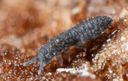
Xenylla grisea is a of (Collembola) in the Hypogastruridae, first described by Axelson in 1900. It is a small, soil-dwelling hexapod found across multiple geographic regions including the Azores, Andean regions, the Caribbean, and Atlantic islands. Laboratory studies have documented its reproductive and developmental timing under controlled conditions.
Pronunciation
How to pronounce Xenylla grisea: //zɛnˈɪlə ˈɡrɪsiə//
These audio files are automatically generated. While they are not always 100% accurate, they are a good starting point.
Identification
present: males and females can be distinguished by body length, color, and body shape. No occurs in this , so both sexes are routinely encountered in .
Images
Habitat
Soil-dwelling; specific microhabitat preferences not well documented beyond general association with soil and litter environments typical of Hypogastruridae springtails.
Distribution
Documented occurrences include: São Miguel (Azores), Andean regions, Antillean region and southern Florida, Ascension and St. Helena islands, and Caribbean mainland.
Diet
In laboratory culture, has been reared successfully on brown whole wheat flour. Natural diet in the wild is not documented.
Life Cycle
At room temperature (25–27°C), females begin laying after the fourth moult. Time from hatching to sexual maturity averages 12.6 days (range 10–15 days). Development involves multiple moults before reproductive maturity.
Ecological Role
As a soil-dwelling , likely contributes to soil nutrient cycling and decomposition processes, though specific ecological functions have not been studied.
Similar Taxa
- Lepidocyrtus cyaneus f. cinereusStudied alongside X. grisea in the same laboratory investigation; both are small springtails reared on similar substrates, though belonging to different (Entomobryidae vs. Hypogastruridae)
More Details
Laboratory rearing
Successfully maintained in culture jars with a base of plaster of paris and charcoal, fed on brown whole wheat flour. This artificial rearing system has allowed detailed study of its reproductive .
Temperature-dependent development
Development rate is temperature-sensitive; the documented 12.6-day average maturation time at 25–27°C suggests faster development than the related Lepidocyrtus cyaneus f. cinereus, which required 16.8 days at 26.5°C.
Sources and further reading
- BugGuide
- Wikipedia
- GBIF taxonomy match
- iNaturalist taxon
- NCBI Taxonomy
- Catalogue of Life
- Meet 'Mantis Master Keeper' Andrew Pfeifer | Bug Squad
- Lifting the veil over mysterious desert truffles: Terfezia’s ecology and diversity towards cultivation | Blog
- Carried with the wind: mass migration of Larch Budmoth to the Russian High Arctic | Blog
- Mantispidae | Beetles In The Bush
- Biology of the Collembola Xenylla grisea Axelson and Lepidocyrtus cyaneus f. cinereus Folsom