
Hypogastruridae
Börner, 1906
Hypogastrurid Springtails
Genus Guides
7- Ceratophysella
- Hypogastrura(snow fleas)
- Microgastrura
- Schaefferia
- Schoettella
- Willemia
- Xenylla(springtails)
is a of springtails (Collembola) comprising approximately 660 across about 40 . Members are common and widespread with distribution. The family includes both soil-dwelling species and specialized forms adapted to extreme environments including marine , caves, and polar regions.
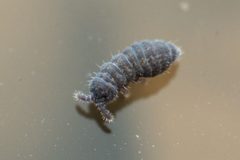
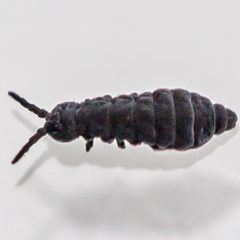
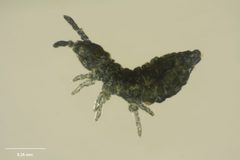
Pronunciation
How to pronounce Hypogastruridae: /haɪpoʊˌɡæstrʊˈrɪdiː/
These audio files are automatically generated. While they are not always 100% accurate, they are a good starting point.
Identification
can be distinguished from related by the combination of: four thickened S- on the fourth antennal segment; modified mouthparts; absence of empodial appendage; presence of 5+5 ; absence of anal spines; and terminal position of the . These features separate them from close relatives Xenylla and Thibaudylla.
Images
Habitat
Highly variable across the . Many occupy soil and leaf litter . The Paraxenylla is predominantly marine littoral, inhabiting sandy zones in coastal environments. Some genera (e.g., Acherontiella) are cave-dwelling. The family includes halophilic/halotolerant species adapted to saline conditions.
Distribution
. Documented from all major biogeographic regions including: Peru, Cuba, Mexico, New Caledonia, Gambia, Japan, Norway, Germany, Russia, Belgium, Poland, Brazil, Iran (Alborz and Kopet Dagh mountains), Canary Islands, and Antarctic & Subantarctic regions.
Diet
Members of the Paraxenylla have been observed to probably feed on and diatoms in marine littoral . Diet for the majority of is not documented.
Similar Taxa
- XenyllaShares modified mouthparts and reduced chaetotaxy; distinguished by presence of anal spines (absent in ) and different antennal chaetotaxy.
- ThibaudyllaClose relative with similar reduced ; separated by antennal segment chaetotaxy and mouthpart structure.
Sources and further reading
- BugGuide
- Wikipedia
- GBIF taxonomy match
- iNaturalist taxon
- NCBI Taxonomy
- Catalogue of Life
- Paraxenylla norvegica sp. nov., the most northern species of the genus (Collembola, Hypogastruridae)
- Two new American species of Paraxenylla (Collembola: Hypogastruridae) and ecological notes
- Collembola of the Canary Islands. I. Introduction and survey of the family Hypogastruridae
- Description of a new species of Paraxenylla (Collembola, Hypogastruridae) from Brazil, with comments on the genus
- Two new species of the genus Acherontiella (Collembola, Hypogastruridae) from caves of the Alborz and Kopet Dagh mountains in Iran.