
Plutomurus
Yosii, R, 1956
Species Guides
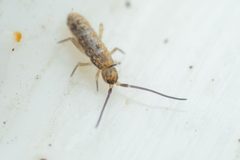
1Plutomurus is a of springtails (Collembola) in the Tomoceridae, established by Yosii in 1956. The genus contains multiple distributed across Europe, the Caucasus, and other regions. Many species are associated with cave , though some occur in surface environments. Species identification relies on detailed morphological characters, particularly chaetotaxy patterns.
Pronunciation
How to pronounce Plutomurus: /pluː.toʊ.ˈmʊr.əs/
These audio files are automatically generated. While they are not always 100% accurate, they are a good starting point.
Identification
-level identification requires examination of body chaetotaxy, specifically the arrangement and types of macrochaetae on the , , and . Diagnostic characters include the number of internal spine-like on tibiotarsi and the number of teeth on the claw. Three types of macrochaetae on thorax and abdomen have been defined for European and Caucasian . Identification keys to European and Western Palearctic species are available.
Images
Habitat
Cave are well-documented for multiple , including records from Western Carpathian caves, Kozmani Cave in Georgia, and other subterranean environments. Some species also occur in surface habitats; P. ruseki has been collected from both surface and subterranean habitats in Slovakia.
Distribution
Europe (including Western Carpathians and Slovakia), Caucasus (Georgia), Caribbean mainland, continental Southeast Asia, northern North America, and Pacific North America.
More Details
Taxonomic history
The was established by Yosii in 1956. Recent taxonomic work has described new from the Caucasus and central Europe, with ongoing research suggesting additional undescribed species may exist in cave systems.
Morphological research focus
Available literature emphasizes morphological , particularly chaetotaxy patterns. Ecological, physiological, and behavioral data remain largely unreported in accessible sources.
Sources and further reading
- BugGuide
- Wikipedia
- GBIF taxonomy match
- iNaturalist taxon
- NCBI Taxonomy
- Catalogue of Life
- Contribution to the genus Plutomurus Yosii (Collembola, Tomoceridae): notes on the morphology of Plutomurus carpaticus Rusek & Weiner and P. unidentatus (Börner)
- Two new species of Plutomurus Yosii (Collembola: Tomoceridae) from the Caucasus and central Europe