
Oncopodura
Carl & Lebedinsky, 1905
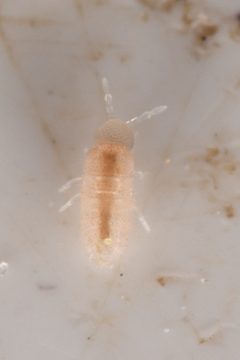
Oncopodura is a of springtails (Collembola) in the Oncopoduridae, established by Carl & Lebedinsky in 1905. The genus contains multiple distributed across tropical and subtropical regions including Amazonia, the Andes, the Caribbean, and Southeast Asia. At least one species, O. moghanensis, has been described from subterranean cave in Iran. Species in this genus exhibit distinctive morphological features of the postantennal organ (PAO) and furca that serve as key diagnostic characters.
Pronunciation
How to pronounce Oncopodura: /ˌɒŋkoʊpəˈdjʊərə/
These audio files are automatically generated. While they are not always 100% accurate, they are a good starting point.
Identification
Diagnostic features for Oncopodura include the structure of the postantennal organ (PAO) with multiple lobes subdivided into finger-like projections, the arrangement of feather-like macrosetae on the dens and manubrium of the furca, and mucro patterns. For O. moghanensis specifically: PAO with 6 long subequal lobes each subdivided into 3–6 fingers; dens bearing 7 feather-like macrosetae with distinctive hook arrangements at basal and parts; distal manubrium with long feather-like macrosetae reaching the middle of the dens; and mucro with 4 teeth including a very sharp tooth plus 2 at the basal half.
Images
Habitat
include tropical and subtropical forest across multiple continents. At least one (O. moghanensis) has been documented from subterranean cave environments in carbonate rock formations.
Distribution
Documented from Amazonia, the Andean region, the Antilles and southern Florida, Caribbean mainland, and continental Southeast Asia. The O. moghanensis is known from Moghan Cave in Razavi Khorasan province, northeastern Iran, within the Kopet Dag mountain range.
More Details
Taxonomic resources
An updated key to world of Oncopodura was provided by Mehrafrooz Mayvan et al. (2024) in the description of O. moghanensis.
Sources and further reading
- BugGuide
- GBIF taxonomy match
- iNaturalist taxon
- NCBI Taxonomy
- Catalogue of Life
- Figure 1 from: Mehrafrooz Mayvan M, Parimuchová A, Kováč Ľ (2024) A new subterranean species of Oncopodura Carl & Lebedinsky, 1905 (Collembola, Entomobryomorpha, Oncopoduridae) from a cave in Northeastern Iran. Subterranean Biology 49: 31-51. https://doi.org/10.3897/subtbiol.49.118293
- Figure 4 from: Mehrafrooz Mayvan M, Parimuchová A, Kováč Ľ (2024) A new subterranean species of Oncopodura Carl & Lebedinsky, 1905 (Collembola, Entomobryomorpha, Oncopoduridae) from a cave in Northeastern Iran. Subterranean Biology 49: 31-51. https://doi.org/10.3897/subtbiol.49.118293
- Figure 2 from: Mehrafrooz Mayvan M, Parimuchová A, Kováč Ľ (2024) A new subterranean species of Oncopodura Carl & Lebedinsky, 1905 (Collembola, Entomobryomorpha, Oncopoduridae) from a cave in Northeastern Iran. Subterranean Biology 49: 31-51. https://doi.org/10.3897/subtbiol.49.118293
- Figure 9 from: Mehrafrooz Mayvan M, Parimuchová A, Kováč Ľ (2024) A new subterranean species of Oncopodura Carl & Lebedinsky, 1905 (Collembola, Entomobryomorpha, Oncopoduridae) from a cave in Northeastern Iran. Subterranean Biology 49: 31-51. https://doi.org/10.3897/subtbiol.49.118293
- Figure 10 from: Mehrafrooz Mayvan M, Parimuchová A, Kováč Ľ (2024) A new subterranean species of Oncopodura Carl & Lebedinsky, 1905 (Collembola, Entomobryomorpha, Oncopoduridae) from a cave in Northeastern Iran. Subterranean Biology 49: 31-51. https://doi.org/10.3897/subtbiol.49.118293
- Figure 6 from: Mehrafrooz Mayvan M, Parimuchová A, Kováč Ľ (2024) A new subterranean species of Oncopodura Carl & Lebedinsky, 1905 (Collembola, Entomobryomorpha, Oncopoduridae) from a cave in Northeastern Iran. Subterranean Biology 49: 31-51. https://doi.org/10.3897/subtbiol.49.118293
- Figure 8 from: Mehrafrooz Mayvan M, Parimuchová A, Kováč Ľ (2024) A new subterranean species of Oncopodura Carl & Lebedinsky, 1905 (Collembola, Entomobryomorpha, Oncopoduridae) from a cave in Northeastern Iran. Subterranean Biology 49: 31-51. https://doi.org/10.3897/subtbiol.49.118293
- Figure 5 from: Mehrafrooz Mayvan M, Parimuchová A, Kováč Ľ (2024) A new subterranean species of Oncopodura Carl & Lebedinsky, 1905 (Collembola, Entomobryomorpha, Oncopoduridae) from a cave in Northeastern Iran. Subterranean Biology 49: 31-51. https://doi.org/10.3897/subtbiol.49.118293
- Figure 11 from: Mehrafrooz Mayvan M, Parimuchová A, Kováč Ľ (2024) A new subterranean species of Oncopodura Carl & Lebedinsky, 1905 (Collembola, Entomobryomorpha, Oncopoduridae) from a cave in Northeastern Iran. Subterranean Biology 49: 31-51. https://doi.org/10.3897/subtbiol.49.118293
- Figure 7 from: Mehrafrooz Mayvan M, Parimuchová A, Kováč Ľ (2024) A new subterranean species of Oncopodura Carl & Lebedinsky, 1905 (Collembola, Entomobryomorpha, Oncopoduridae) from a cave in Northeastern Iran. Subterranean Biology 49: 31-51. https://doi.org/10.3897/subtbiol.49.118293
- Figure 3 from: Mehrafrooz Mayvan M, Parimuchová A, Kováč Ľ (2024) A new subterranean species of Oncopodura Carl & Lebedinsky, 1905 (Collembola, Entomobryomorpha, Oncopoduridae) from a cave in Northeastern Iran. Subterranean Biology 49: 31-51. https://doi.org/10.3897/subtbiol.49.118293