
Salina
MacGillivray, 1894
Species Guides
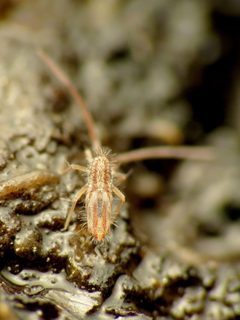
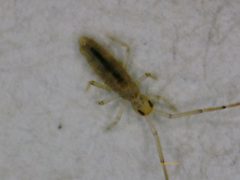
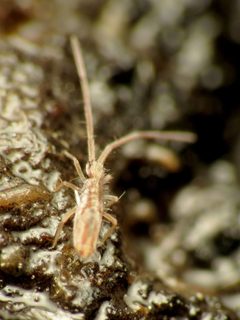
3Salina is a of elongate-bodied springtails in the Paronellidae, first described by MacGillivray in 1894. The genus contains approximately five described . These springtails are distributed across tropical and subtropical regions including the Amazon, Andean regions, the Caribbean, and continental Southeast Asia. They are characterized by their slender, elongated body form typical of the Paronellidae family.
Pronunciation
How to pronounce Salina: /səˈlaɪnə/
These audio files are automatically generated. While they are not always 100% accurate, they are a good starting point.
Identification
Distinguished from other Paronellidae by specific chaetotaxy (bristle arrangement) patterns and body proportions. Accurate identification to level requires examination of antennal segmentation, claw structure, and abdominal chaetotaxy under magnification. Similar elongate springtails in the Entomobryidae may be confused with Salina but differ in antennal structure and .
Images
Appearance
Elongate-bodied springtails with slender, cylindrical body form. Members of Paronellidae typically exhibit elongated and well-developed (springing organ). Body shape is streamlined compared to more globular springtail .
Habitat
Tropical and subtropical environments. Specific microhabitat preferences are poorly documented but likely include leaf litter, soil surface, and decaying organic matter in humid forest .
Distribution
Amazon basin; Andean regions of South America; Antilles and southern Florida; Caribbean mainland; continental Southeast Asia. Distribution is primarily tropical with records from Neotropical and Oriental biogeographic regions.
Ecological Role
As with other Collembola, likely contributes to decomposition processes and nutrient cycling in soil and leaf litter . Specific ecological functions for Salina have not been studied.
Similar Taxa
- EntomobryidaeSimilar elongate body form; distinguished by antennal structure and
- Other Paronellidae generaSame ; distinguished by specific chaetotaxy patterns and body proportions
More Details
Taxonomic History
The was established by A.D. MacGillivray in 1894. Classification within Collembola has undergone revision, with Salina currently placed in Paronellidae rather than Entomobryidae as some earlier sources suggested.
Research Status
The is poorly studied compared to more common genera. Most descriptions date from early twentieth century collections. Modern molecular phylogenetic studies have not focused on this genus.
Sources and further reading
- BugGuide
- Wikipedia
- GBIF taxonomy match
- iNaturalist taxon
- NCBI Taxonomy
- Catalogue of Life
- Research Entomologist Daniel Hasegawa Targets Thrips | Bug Squad
- Fusing Art with Science: 'I'd Like a Faster Maggot' | Bug Squad
- Complexities Behind Ecosystem Services | Bug Squad
- Congrats to All the Entomology Award Winners! | Bug Squad
- Eye on the Buckeye | Bug Squad
- Uncategorized | Blog - Part 44