
Heteromurus
Wankel, 1860
Species Guides
2- Heteromurus major
- Heteromurus nitidus(slender springtail)
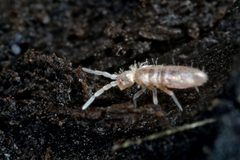
Heteromurus is a of slender-bodied springtails established by Wankel in 1860. The genus contains at least three described : H. margaritarius, H. nitidus, and H. tenuicornis. Members are placed in the Heteromurinae and are characterized by elongated and a generally slender habitus compared to other entomobryomorph springtails. The genus has been subject to taxonomic revision, particularly regarding the subgenus Verhoeffiella, which includes cave-dwelling species showing troglomorphic adaptations.
Pronunciation
How to pronounce Heteromurus: /ˌhɛtɛroʊˈmjʊrəs/
These audio files are automatically generated. While they are not always 100% accurate, they are a good starting point.
Identification
within Heteromurus are distinguished by antennal chaetotaxy patterns and the arrangement of S- on the body. The subgenus Verhoeffiella is characterized by troglomorphic features including elongated appendages and reduced pigmentation in cave-dwelling . Heteromurus nitidus has been noted as having a distinctive cuticular chemistry, including the irregular prenylated diterpene nitidane.
Images
Habitat
Soil-dwelling; some (subgenus Verhoeffiella) are specialized cave inhabitants. Distribution of H. nitidus has been observed to vary according to soil acidity levels.
Distribution
Records from Andean region, Caribbean mainland, Central Australia, Continental Southeast Asia, and East African Steppe. The subgenus Verhoeffiella shows disjunct distribution with H. (V.) absoloni in Montenegro and H. (V.) gamae described from Catalonia, Spain.
Ecological Role
Heteromurus nitidus has been documented interacting with earthworms and subject to pressure, suggesting involvement in soil dynamics. As a soil-dwelling , members likely contribute to decomposition processes, though specific functions at the level remain undocumented.
Human Relevance
Heteromurus nitidus has been used as a test organism in ecotoxicological studies examining effects of microplastics from agricultural mulching films on soil survival and .
Similar Taxa
- EntomobryaBoth are slender entomobryid springtails; Heteromurus is distinguished by -level placement in Heteromurinae and specific antennal chaetotaxy patterns.
- OrchesellaBoth belong to Orchesellidae; Orchesella typically have more robust body forms and different chaetotaxy arrangements compared to the slender Heteromurus.
More Details
Taxonomic instability
placement has varied between sources: GBIF and Catalogue of Life place Heteromurus in Orchesellidae, while NCBI and older sources maintain Entomobryidae. The Heteromurinae and tribe Heteromurini are consistently recognized.
Subgenus Verhoeffiella
The subgenus Verhoeffiella includes troglomorphic cave-dwelling with elongated and appendages. Taxonomic status of Verhoeffiella has been debated, with some authors treating it as a distinct .
Secondary chemistry
Heteromurus nitidus produces nitidane, an irregular prenylated diterpene found in its , representing a chemically distinctive feature among springtails.
Sources and further reading
- BugGuide
- Wikipedia
- GBIF taxonomy match
- iNaturalist taxon
- NCBI Taxonomy
- Catalogue of Life
- Distribution of Heteromurus nitidus (Hexapoda, Collembola) according to soil acidity: interactions with earthworms and predator pressure
- Survival and reproduction effects of microplastics from three agricultural mulching films on Folsomia candida, Sinella curviseta, Heteromurus nitidus and Ceratophysella denticulata (Collembola)
- <p><strong>The puzzling distribution of <em>Heteromurus</em> (Verhoeffiella) absoloni Kseneman, 1938 (Collembola: Entomobryidae: Heteromurinae) resolved: detailed redescription of the nominal species and description of a new species from Catalonia (Spain)</strong></p>
- Nitidane: An Irregular Prenylated Diterpene from the Cuticle of the Springtail Heteromurus nitidus.