
Homidia
Börner, 1906
springtails
Species Guides
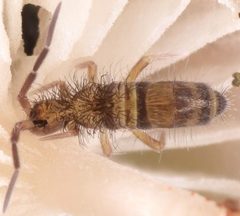
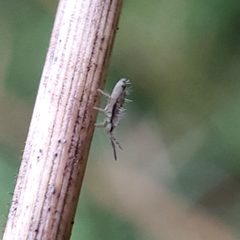
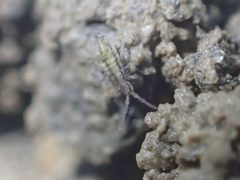
2Homidia is a of springtails (Collembola: Entomobryidae) comprising 84 described worldwide, with 71% of species (60) recorded from China. The genus is distinguished by specific morphological features including inner spines at the base of the dens, a bidentate mucro with a much larger subapical tooth, eyebrow-like macrochaetae formations on the part of the fourth abdominal segment, and absence of . Colour pattern and chaetotaxy serve as important diagnostic characters for species identification.
Pronunciation
How to pronounce Homidia: /hɔːˈmɪdiə/
These audio files are automatically generated. While they are not always 100% accurate, they are a good starting point.
Identification
Distinguished from other Entomobryidae by the combination of: inner spines at the base of the dens; a row of macrochaetae in eyebrow-like formation on the part of abdominal segment IV; a bidentate mucro with the subapical tooth much larger than the tooth; and complete absence of . Colour pattern and chaetotaxy are critical for -level identification. Smooth post-labial occur in some species and represent a diagnostic character.
Images
Habitat
Leaf litter in forest , primarily in mountainous regions. Documented elevations range from 682 m to 1,626 m above sea level.
Distribution
Center of diversity in East Asia, with 60 of 84 (71%) occurring in China. Additional records from: Korean Peninsula (16 species), Japan (14), Vietnam (7), United States (6), Taiwan (6), India (2), Thailand (2), Bangladesh, Indonesia (Java, Sumatra, Sulawesi), Malaya, and Singapore (1 each). Within China, highest diversity in Zhejiang Province (22 species), followed by Jiangxi, Fujian, and Guangxi (7 each).
Ecological Role
Decomposer in leaf litter .
Sources and further reading
- BugGuide
- Wikipedia
- iNaturalist taxon
- NCBI Taxonomy
- Catalogue of Life
- A Review of the Genus Homidia (Collembola, Entomobryidae) in China Informed by COI DNA Barcoding, with the Description of Three New Species.
- Smooth post-labial chaetae in Homidia (Collembola, Entomobryidae) and the description of four new species from China with the aid of DNA barcoding.
- Revisiting the type species of the genus Homidia (Collembola, Entomobryidae).