
Entomobrya multifasciata
(Tullberg, 1871)
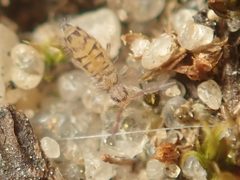
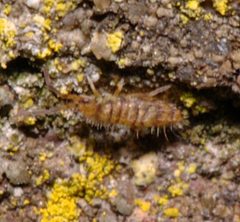
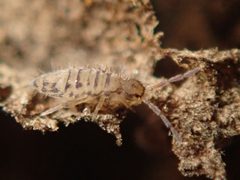
Entomobrya multifasciata is a cosmopolitan springtail in the Entomobryidae, first described by Tullberg in 1871. It is characterized by a distinctive wavy striped pattern and elongated body form. The species shows a notable preference for urban environments over wooded areas.
Pronunciation
How to pronounce Entomobrya multifasciata: //ˌɛntəˈmɒbriə ˌmʌltɪfæsiˈɑːtə//
These audio files are automatically generated. While they are not always 100% accurate, they are a good starting point.
Identification
The wavy striped pattern distinguishes this from many other Entomobrya species, which often have simpler linear or spotted patterns. The combination of elongated body form and banded coloration is diagnostic within the .
Images
Appearance
Elongated body with a wavy striped pattern on the surface. The top of the is lightly hairy. Patterning consists of multiple transverse bands giving a banded or fasciated appearance.
Habitat
Prefers urban and disturbed environments; becomes less common in heavily wooded areas. Found on vegetation including leaves, and rarely under wood chips.
Distribution
distribution. Documented from the Azores (Corvo, Faial, Flores, Pico, São Miguel) and widespread globally.
Diet
Has been observed feeding on pollen grains.
Behavior
Rests on leaf surfaces. Feeding activity focused on pollen.
Similar Taxa
- Other Entomobrya speciesE. multifasciata is distinguished by its wavy striped pattern versus the linear or spotted patterns typical of .
More Details
Taxonomic history
Originally described as Degeeria multifasciata by Tullberg in 1871.
Observation frequency
Well-documented with over 2,500 observations on iNaturalist.