
Oniscus
Linnaeus, 1758
woodlice
Species Guides
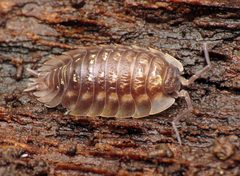
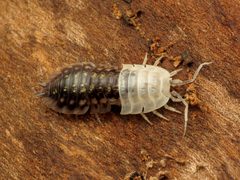
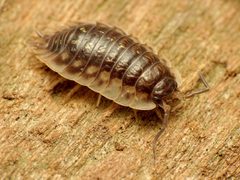
1- Oniscus asellus(common woodlouse)
Oniscus is a of terrestrial isopods (woodlice) in the Oniscidae. The genus comprises five with restricted distributions: three species are to northwestern Iberia (O. ancarensis, O. galicianus, O. lusitanicus), one to the Pyrenees (O. simonii), and one species, O. asellus, is widespread across Europe and has been introduced to the Americas. O. asellus has been studied for its ability to fragment weathered polystyrene plastic into microplastics in laboratory settings.
Pronunciation
How to pronounce Oniscus: /oˈnɪskʊs/
These audio files are automatically generated. While they are not always 100% accurate, they are a good starting point.
Images
Distribution
Three are confined to northwestern Iberia: Oniscus ancarensis, O. galicianus, and O. lusitanicus. One species, O. simonii, is restricted to the Pyrenees. Oniscus asellus is widespread across Europe and has been introduced to the Americas.
Behavior
Oniscus asellus has been observed to fragment weathered polystyrene plastic into microplastic particles in laboratory experiments, though it does not fragment pristine polystyrene. Behavioral responses to environmental conditions including food types, substrates, moisture levels, and temperatures have been studied in laboratory settings.
More Details
Microplastic Fragmentation
Research by Helmberger et al. (2024) demonstrated that Oniscus asellus can fragment weathered polystyrene foam into microplastic particles within 24 hours in laboratory conditions. The isopod showed preference for polystyrene that had been soaked in soil suspension over pristine or UV-exposed plastic, suggesting that surface condition affects palatability.
Microbial Associations
Studies have examined microorganisms associated with the and hepatopancreas of Oniscus asellus, indicating complex microbial relationships in its .
Neurosecretory Research
Oniscus asellus has been used as a model organism for studying neurosecretory in terrestrial isopods, specifically related to the Y-organ.
Sources and further reading
- BugGuide
- Wikipedia
- iNaturalist taxon
- NCBI Taxonomy
- Catalogue of Life
- Oniscus asellus Archives - Entomology Today
- Study Examines Insects' Role in Plastic Pollution
- isopod with plastic - Entomology Today
- Oogenesis in oniscus asellus
- Microorganisms associated with the hindgut of Oniscus asellus (Crustacea, Isopoda)
- The Effect of Different Foods, Substrates, Moisture, and Temperatures on the Behavior in Oniscus asellus
- Bacteria associated with the hepatopancreas of the woodlice Oniscus asellusand Porcellio scaber(Crustacea, Isopoda)
- Neurosecretory action potentials recorded extracellularly from a neurohemal region associated with the Y-organ in the terrestrial isopod,Oniscus asellus