
Cirolanides
Benedict, 1896
Species Guides
1Cirolanides is a of eyeless isopods in the Cirolanidae, first described by Benedict in 1896. The genus contains two : C. texensis and C. wassenichae. Members are characterized by reduced visual structures and specialized appendages adapted for subterranean life. These crustaceans represent a lineage adapted to dark, aquatic .
Pronunciation
How to pronounce Cirolanides: //sɪroʊˈlænaɪdiːz//
These audio files are automatically generated. While they are not always 100% accurate, they are a good starting point.
Identification
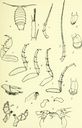
Distinguished from other cirolanid isopods by the complete absence of . The three-segmented antennule base with elongated and five-segmented base provide additional diagnostic characters. The strongly prehensile first pereopod pair contrasts with the slender ambulatory nature of the other six pairs.
Images
Appearance
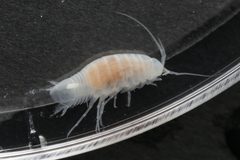
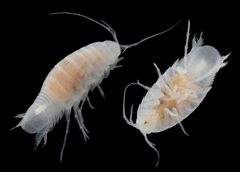
Eyeless isopods with elongated body form. Antennule base consists of three segments with an elongated . base has five segments. First pair of pereopods ( legs) is strongly prehensile, modified for grasping. Remaining six pairs of pereopods are slender and ambulatory, adapted for walking.
Habitat
Subterranean aquatic environments. Associated with groundwater systems and cave given eyeless .
Distribution
Known from Texas, USA. C. texensis and C. wassenichae both described from localities in this region.
Similar Taxa
- Other Cirolanidae generaMost cirolanids possess functional ; Cirolanides is distinguished by complete eyelessness.
More Details
Taxonomic history
The was established by Benedict in 1896 with C. texensis as the type . A second species, C. wassenichae, was described in 2019 from specimens in Hays County, Texas.