Stenorhynchus
Lamarck, 1818
arrow crabs
Species Guides
1- Stenorhynchus seticornis(Yellowline Arrow Crab)
Stenorhynchus is a of marine spider crabs ( Inachoididae) commonly known as arrow crabs. These crabs are characterized by extremely long, slender legs and a narrow, often triangular or isosceles-shaped . Several are popular in the ornamental aquarium trade, including the yellowline arrow crab (S. seticornis) and red arrow crab (S. yangi). The genus exhibits notable morphological adaptations for life in structurally complex marine such as coral reefs.
Pronunciation
How to pronounce Stenorhynchus: //ˌstɛnoʊˈrɪŋkəs//
These audio files are automatically generated. While they are not always 100% accurate, they are a good starting point.
Identification
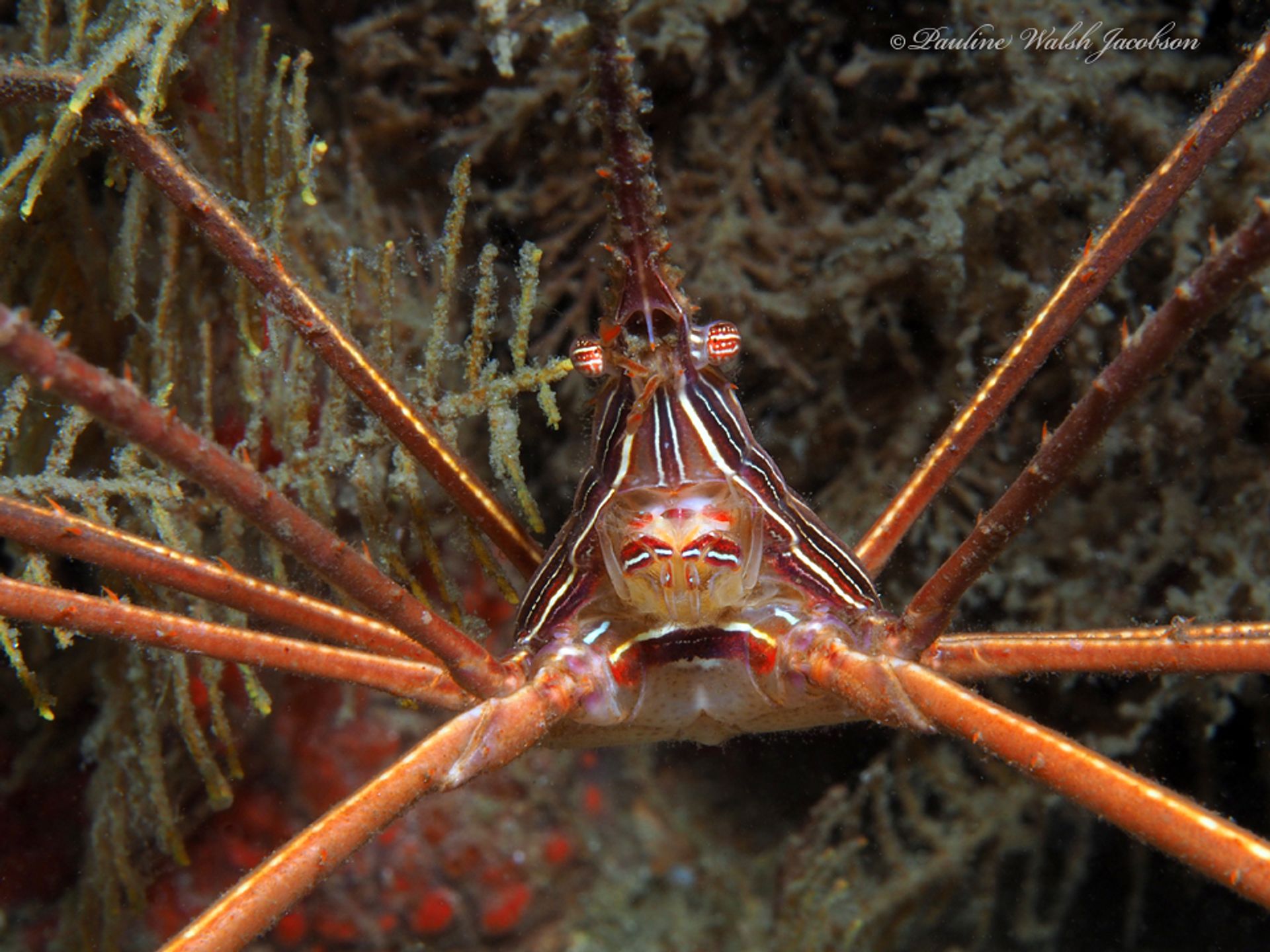
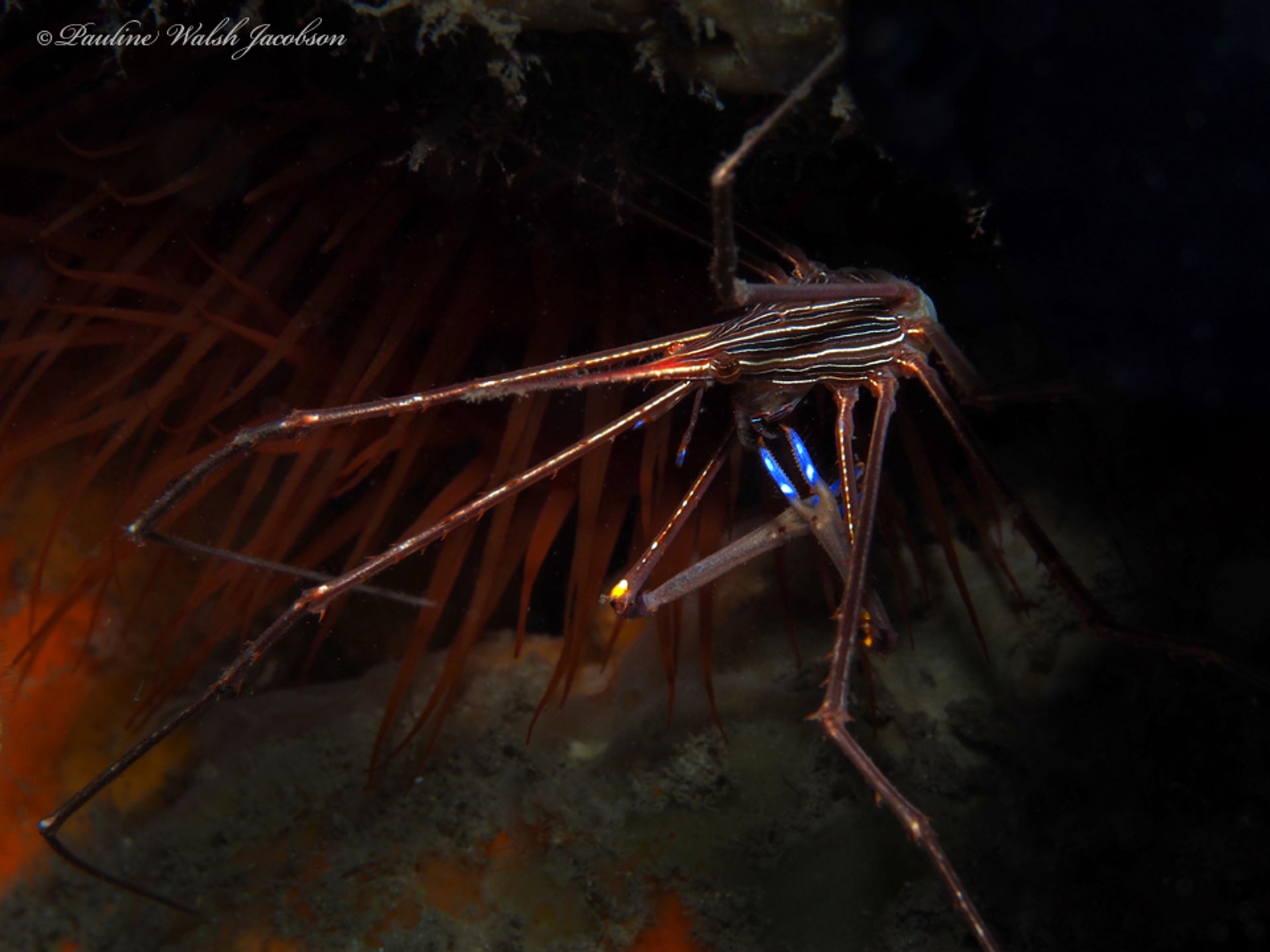
Arrow crabs are distinguished from other majoid crabs by their exceptionally elongated, thin legs and narrow, often or triangular . The rostrum is typically long and pointed, extending forward between the . is present: males possess significantly longer chelipeds than females. within the may be differentiated by coloration patterns, such as the yellow longitudinal stripe of S. seticornis versus the red coloration of S. yangi.
Images
Habitat
Marine environments, primarily coral reef on fore-reef slopes at depths of 3–15 meters. occupy crevices and complex structural refugia during daylight hours. S. debilis has been documented in bivalve mariculture devices in the Gulf of California.
Distribution
Tropical and subtropical western Atlantic Ocean (including Caribbean Sea: Barbados); eastern Pacific Ocean (Gulf of California, Mexico). Specific distribution varies by .
Diet
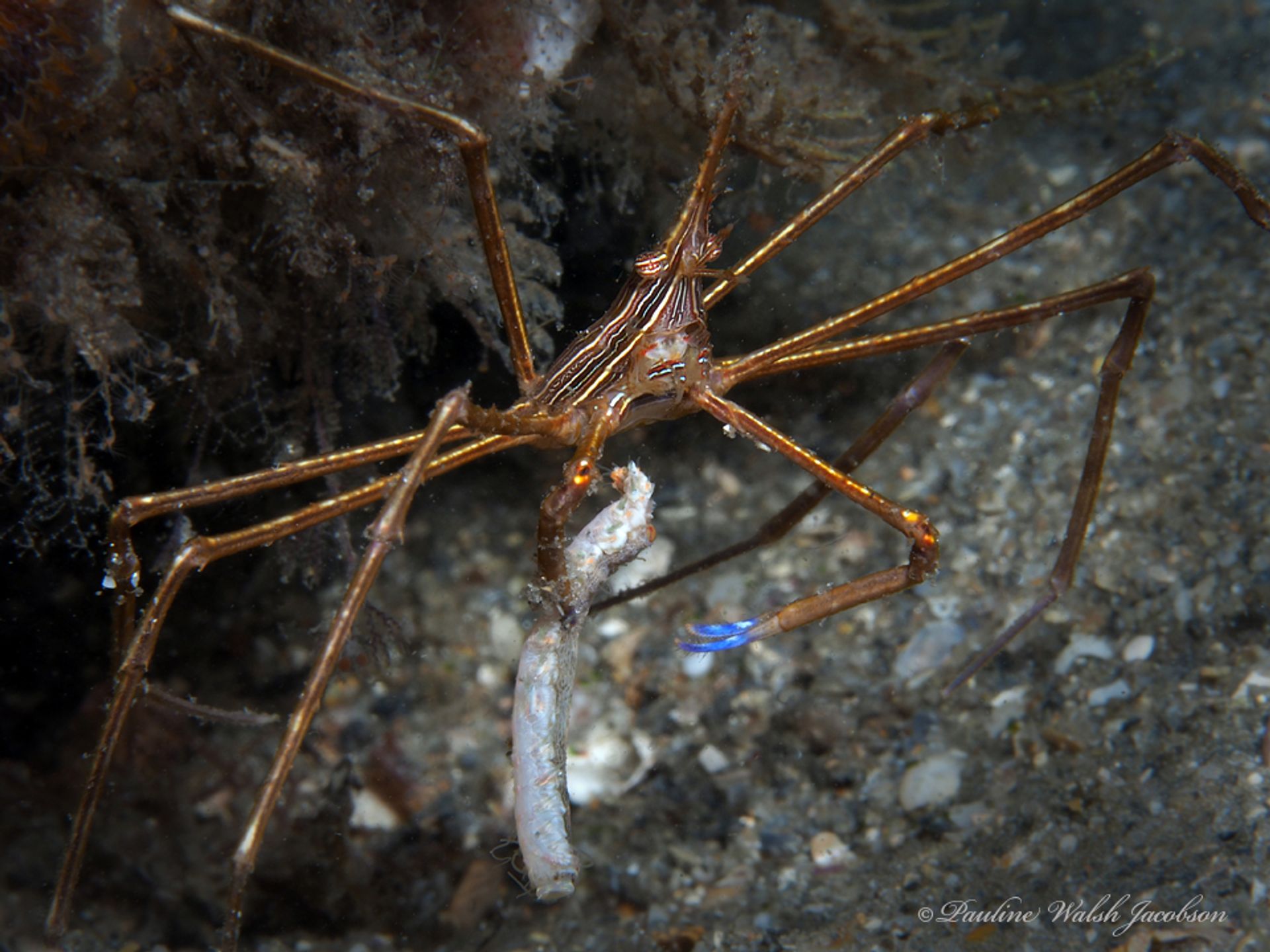
suspension feeding on planktonic organisms captured from water currents using elongated chelipeds while positioned on elevated substrates.
Life Cycle
Females carry masses attached to pleopods. S. debilis likely completes three maturation/ cycles within 3–4 months after the first crab instar, with step-wise growth patterns correlated with shape.
Behavior
Strong diel activity pattern: cryptic in reef crevices during daylight, emerging at dusk to assume exposed positions on coral . Exhibits pronounced site fidelity, returning to the same daytime shelter after foraging. Anti- includes rapid withdrawal into crevices and camouflage through body posture and coloration matching surrounding corals. Uses long legs for movement through complex coral structures.
Ecological Role
planktivore on coral reefs; prey for reef ; structural association with coral reef framework.
Human Relevance
Popular ornamental marine in the aquarium trade worldwide. S. seticornis and S. yangi are particularly sought after. S. debilis is collected from the southwestern Gulf of California for this trade.
Sources and further reading
- BugGuide
- Wikipedia
- iNaturalist taxon
- NCBI Taxonomy
- Catalogue of Life
- IN SITU OBSERVATIONS ON THE BEHAVIOUR AND BIOLOGY OF THE TROPICAL SPIDER CRAB STENORHYNCHUS SETICORNIS HERBST (CRUSTACEA, DECAPODA, BRACHYURA)
- Fecundity traits of young ovigerous females of yellow-line-arrow spider crab Stenorhynchus debilis (Brachyura: Inachoididae) in Bahía de La Paz Baja California Sur, México