
Cryptolithodes
Brandt, 1848
king crabs
Species Guides
1- Cryptolithodes sitchensis(Umbrella Crab)
Cryptolithodes is a of king crabs in the Lithodidae, established by Brandt in 1848. The genus name derives from Greek, meaning 'hidden stone', likely referencing the crabs' cryptic, rock-mimicking appearance. The genus contains three recognized , including the well-documented C. typicus from the northeastern Pacific. Members are classified within the infraorder Anomura, which includes hermit crabs, king crabs, and related decapods.
Pronunciation
How to pronounce Cryptolithodes: /ˌkrɪptoʊˈlaɪθoʊdiːz/
These audio files are automatically generated. While they are not always 100% accurate, they are a good starting point.
Identification
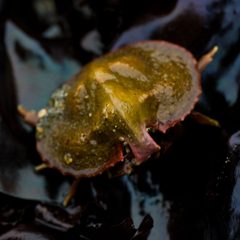
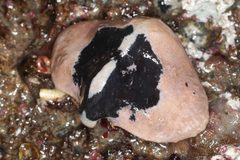
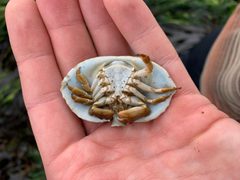
Distinguished from other lithodid by a highly flattened, broad that closely resembles the contour of surrounding rocks. The dorsoventrally compressed body and irregular, tuberculate surface texture provide effective camouflage against rocky substrates. Cryptolithodes lack the pronounced spination seen in many other king crabs, instead exhibiting a relatively smooth, encrusted appearance that enhances their resemblance to stones.
Images
Habitat
Rocky intertidal and shallow subtidal zones, where individuals position themselves on or among stones to exploit their cryptic .
Distribution
Northeastern Pacific Ocean; documented from British Columbia, Canada southward along the North American coast.
Life Cycle
Larval development has been described for C. typicus, indicating a complex with planktonic larval stages preceding benthic existence.
Behavior
Cryptolithodes exhibit strong , remaining motionless on rocky substrates to avoid detection by . This stone-mimicking is a primary defense strategy.
Similar Taxa
- LithodesMore heavily spined with pronounced rostral and marginal spines; lacks the flattened, smooth, rock-mimicking profile of Cryptolithodes.
- ParalithodesLarger body size with distinct color patterns and spiny ornamentation; commercially harvested such as P. camtschaticus differ markedly in and .
More Details
Etymology
The generic name combines Greek 'kryptos' (hidden, concealed) and 'lithodes' (stone-like), referring to the crabs' remarkable resemblance to rocks.
Sources and further reading
- BugGuide
- Wikipedia
- GBIF taxonomy match
- iNaturalist taxon
- NCBI Taxonomy
- Catalogue of Life
- Life History and Larval Development of Cryptolithodes Typicus Brandt (Decapoda, Anomura) From British Columbia
- Life history and larval development of Cryptolithodes typicus Brandt (Decapoda, Anomura) from British Columbia