
Sididae
Genus Guides
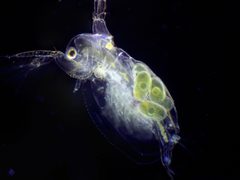
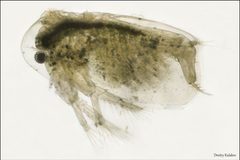
2Sididae is a of ctenopods (small planktonic crustaceans) in the order Diplostraca. The family comprises approximately 6 and at least 20 described , including well-known genera such as Diaphanosoma, Sida, and Latona. Members are primarily freshwater inhabitants distributed across multiple continents, with some species introduced to regions outside their native ranges.
Pronunciation
How to pronounce Sididae: /ˈsɪdɪˌdiː/
These audio files are automatically generated. While they are not always 100% accurate, they are a good starting point.
Identification
Sididae can be distinguished from other ctenopod by morphological features visible under microscopy, including structure and post-abdominal claw . Specific identification requires examination of fine morphological details such as antennule structure, pore arrangement, and thoracic limb morphology; keys for regional faunas exist for some areas including Brazil.
Images
Habitat
Freshwater environments including lakes, , and river systems. Some occupy limnetic (open water) zones, while others occur in vegetation-associated areas. Waters range from oligotrophic to eutrophic conditions.
Distribution
distribution with records from Europe (Norway, Finland, Denmark, Sweden), Asia (Russia, Siberia, China, Thailand, Vietnam, India, Bangladesh), Africa (West Africa), South America (Brazil, Colombia), and North America (Vermont, USA). Some have been introduced to areas outside their native ranges.
Human Relevance
Some have been accidentally introduced by humans to areas outside their native ranges. Members serve as subjects in zooplankton studies and aquatic monitoring.
Similar Taxa
- HolopedidaeBoth are within the order Ctenopoda; Holopedidae contains the Holopedium, which can be distinguished from Sididae genera by differences in structure and body form.
More Details
Taxonomic note
The Limnosida (containing L. frontosa) has been characterized as the most primitive member of the order Ctenopoda based on morphological analysis showing a combination of advanced and evolutionary primitive features.
Sources and further reading
- BugGuide
- Wikipedia
- GBIF taxonomy match
- iNaturalist taxon
- NCBI Taxonomy
- Diaphanosoma Dumonti Sp. Nov. (Cladocera, Daphniiformes, Sididae) From China
- Diaphanosoma senegal Gauthier, 1951 (Crustacea: Cladocera: Sididae) in South-East Asia
- Redescription of Limnosida frontosa Sars, 1862 (Crustacea: Cladocera: Sididae), with evidence of possible incipient species differentiation
- Redescription ofDiaphanosoma volzi Stingelin, 1905 (Crustacea: Daphniiformes: Sididae) with remarks on comparative morphology, biology and geographical distribution
- Identification key of Ctenopoda (Cladocera, Holopedidae, Sididae) taxa from Brazil with remarks on taxonomy and geographic distribution
- The second record of Diaphanosoma senegal Gauthier, 1951 (Crustacea : Daphniiformes : Sididae) in Africa, with a redescription of the species and ecological and distributional setes
- PRESENCE OF DIAPHANOSOMA SPINULOSUM HERBST, 1975 (CRUSTACEA: CLADOCERA: CTENOPODA, SIDIDAE) IN A COASTAL SYSTEM OF NORTHERN COLOMBIA, WITH COMMENTS ON D. BIRGEI KOŘÍNEK, 1981
- New Records of Cladoceran <i>Diaphanosoma dubium</i> (Crustacea: Sididae) in the Middle Volga Reservoirs (Russia)