
Chthonius
C. L. Koch, 1843
Species Guides
1Chthonius is a of pseudoscorpions in the Chthoniidae, established by C. L. Koch in 1843. The genus contains numerous , many of which are cave-dwelling and exhibit Tertiary relict distributions. Species in this genus display neotenic characteristics, with retaining chaetotaxy patterns typical of nymphal stages in related . Members are found across Europe, the Mediterranean, and extend into Central Asia, with notable centers of diversity in the Balkan Peninsula and karst regions.
Pronunciation
How to pronounce Chthonius: //ˈkθoʊ.ni.əs//
These audio files are automatically generated. While they are not always 100% accurate, they are a good starting point.
Identification
Distinguished from other chthoniid by chelal tooth formula, arrangement of , and coxal setation. Specific identification requires examination of: number and arrangement of setae on and ; chelal tooth counts on fixed and movable fingers; shape of collars in males; tarsal segmentation of leg IV; and detailed morphometric ratios. Neotenic may retain nymphal chaetotaxy patterns into adulthood, complicating identification of stages. Comparison with type material often necessary due to cryptic diversity in cave-dwelling lineages.
Images
Appearance
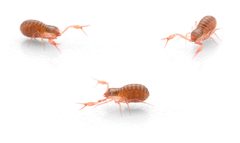
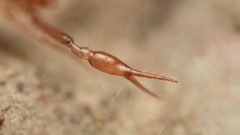
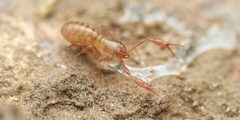
Small pseudoscorpions, typically 2–4 mm in body length. with distinct setal arrangement; chelae with variable tooth counts used in identification. of leg IV with characteristic segmentation. Body coloration generally pale to yellowish-brown, with reduced pigmentation in cave-dwelling species. slender, with fixed and movable fingers bearing opposing teeth. with specific setal patterns; coxal spines present and taxonomically informative. arranged in diagnostic patterns on chelal fingers.
Habitat
Diverse microhabitats including leaf litter, soil, under stones, and caves. Many are specialized troglobites restricted to karst cave systems. Non-cave species occupy humid terrestrial microhabitats in forests and rocky areas. Cave-dwelling species show adaptations including reduced , elongated appendages, and depigmentation. Karst regions of the Balkans, Dalmatia, and other Mediterranean limestone areas harbor significant diversity.
Distribution
Widespread across Europe, Mediterranean basin, and extending into Central Asia. Documented from Croatia, Bosnia and Herzegovina, Montenegro, Kyrgyzstan, and other regions. Center of diversity in Balkan Peninsula with numerous . Distribution patterns reflect Tertiary relict status for many cave-dwelling .
Seasonality
Reproductive season documented for C. ischnocheles: carried from June onward, with most abundant July–September. occurs primarily as deutonymphs and tritonymphs, with maturity reached following June–July. Seasonal patterns likely vary by and , with cave-dwelling potentially showing reduced seasonality.
Life Cycle
Post-embryonic development includes three nymphal stages: , deutonymph, and tritonymph. carried by female until hatching. In C. ischnocheles, protonymphs appear July–September; deutonymphs and tritonymphs overwinter; maturity reached June–July of following year. Chaetotaxy changes through nymphal stages, with some showing neotenic retention of nymphal characteristics in .
Behavior
Males produce in absence of females; spermatophore stalk bears lateral collars and oil secretion hypothesized to function as female attractant . Indirect sperm transfer via deposited spermatophores. Spermatophore formation involves sequential secretion from glands (sperm packet ) and gland (stalk and collar formation).
Similar Taxa
- NeobisiumOverlaps in (leaf litter, caves); distinguished by chelal , trichobothrial patterns, and male genitalia structure
- RoncusSympatric in Balkan cave faunas; distinguished by chelal tooth formula and coxal setation patterns
More Details
Neoteny
Chthonius exhibits regressive evolution through , where chaetotaxy partially resembles nymphal stages of related . This has taxonomic implications for species identification based on setal patterns.
Subgeneric classification
The includes subgenera such as Chthonius (Chthonius) and Chthonius (Globochthonius), distinguished by morphological characters including chelal and body proportions.
Sources and further reading
- BugGuide
- Wikipedia
- iNaturalist taxon
- NCBI Taxonomy
- Catalogue of Life
- Chthonius (Chthonius) makirina (Chthoniidae, Pseudoscorpiones), a new species from Croatia
- On two new cave pseudoscorpions, Chthonius (Chthonius) pagus n.sp. (Chthoniidae) and Roncus navalia n.sp. (Neobisiidae), from the island of Pag, Croatia
- Figure 3 from: Prado GC, Viana ACM, Milko DA, Ferreira RL (2021) Chthonius kirghisicus (Pseudoscorpiones, Chthoniidae), a new cave-dwelling species from Kyrgyzstan. Subterranean Biology 40: 27-41. https://doi.org/10.3897/subtbiol.40.67303
- Spermatophore formation in the pseudoscorpion Chthonius ischnocheles (Chthoniidae)
- Figure 1 from: Prado GC, Viana ACM, Milko DA, Ferreira RL (2021) Chthonius kirghisicus (Pseudoscorpiones, Chthoniidae), a new cave-dwelling species from Kyrgyzstan. Subterranean Biology 40: 27-41. https://doi.org/10.3897/subtbiol.40.67303
- Figure 2 from: Prado GC, Viana ACM, Milko DA, Ferreira RL (2021) Chthonius kirghisicus (Pseudoscorpiones, Chthoniidae), a new cave-dwelling species from Kyrgyzstan. Subterranean Biology 40: 27-41. https://doi.org/10.3897/subtbiol.40.67303
- Figure 6 from: Prado GC, Viana ACM, Milko DA, Ferreira RL (2021) Chthonius kirghisicus (Pseudoscorpiones, Chthoniidae), a new cave-dwelling species from Kyrgyzstan. Subterranean Biology 40: 27-41. https://doi.org/10.3897/subtbiol.40.67303
- THE EXTERNAL MORPHOLOGY AND LIFE HISTORY OF THE PSEUDOSCORPION CHTHONIUS ISCHNOCHELES (HERMANN)
- Population dynamics, distribution patterns and life cycles of Neobisium muscorum and Chthonius orthodactylus (Pseudoscorpiones: Arachnida)
- Figure 5 from: Prado GC, Viana ACM, Milko DA, Ferreira RL (2021) Chthonius kirghisicus (Pseudoscorpiones, Chthoniidae), a new cave-dwelling species from Kyrgyzstan. Subterranean Biology 40: 27-41. https://doi.org/10.3897/subtbiol.40.67303
- Chthonius (Globochthonius) Medeonis n. sp.: A new cave false scorpion from Montenegro
- Figure 4 from: Prado GC, Viana ACM, Milko DA, Ferreira RL (2021) Chthonius kirghisicus (Pseudoscorpiones, Chthoniidae), a new cave-dwelling species from Kyrgyzstan. Subterranean Biology 40: 27-41. https://doi.org/10.3897/subtbiol.40.67303
- On two new cave-dwelling and relict pseudoscorpions of the genus Chthonius C.L. Koch (Chthoniidae, Pseudoscorpiones) from Bosnia