
Chthoniidae
Daday, 1888
chthoniid pseudoscorpions
Genus Guides
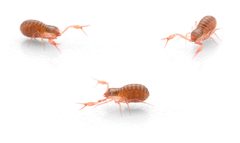
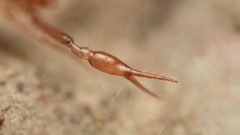
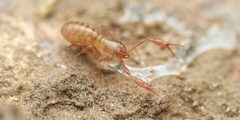
2Chthoniidae is a of pseudoscorpions within the superfamily Chthonioidea, containing over 600 in approximately 30 . The family has undergone taxonomic revision, with former families Tridenchthoniidae and Lechytiidae now treated as (Tridenchthoniinae and Lechytiinae). Fossil species are known from Baltic, Dominican, and Burmese amber. Members exhibit diverse preferences, with many species adapted to subterranean environments while others occupy surface habitats including leaf litter and soil.
Pronunciation
How to pronounce Chthoniidae: /ˈkθɒni.aɪ.iːdiː/
These audio files are automatically generated. While they are not always 100% accurate, they are a good starting point.
Identification
Distinguished from other pseudoscorpion by a combination of chelal trichobothrial patterns and genital atrium structure. The family encompasses three with differing morphological characteristics: Chthoniinae (including the Chthonius), Tridenchthoniinae, and Lechytiinae. Specific identification requires examination of chelal , trichobothrial positions, and male genital structures.
Images
Habitat
Highly variable across and . Epigean occur under topsoil, in leaf litter layers, under rocks and stones. Hypogean (cave-dwelling) species are common, particularly in karst regions; some are troglobites lacking and pigmentation. The genus Lagynochthonius is documented from both surface and cave . Tyrannochthonius species show global association with caves, including records from Brazil, China, and Australasia.
Distribution
with strong representation in temperate and tropical regions. Chthonius ranges from Europe to Iran, North Africa, and North America with one cosmopolitan . Tyrannochthonius occurs from Brazil to the southern USA, with extensions to Australasia, Africa, and Hawaii. Lagynochthonius is distributed across Australasia and Africa. Mundochthonius spans Eurasia, North America, and the Dominican Republic. New Zealand, Australia, and Chile including Maorichthtonius, Sathrochthonius, and Chiliochthonius.
Behavior
Males of at least Chthonius ischnocheles produce in the absence of females, depositing them on the substrate for indirect sperm transfer. The spermatophore consists of a stalk with lateral collars and a sperm-containing capsule; a secretion from lateral glands may function as a to attract females.
Ecological Role
Predatory arthropods in soil and litter ; cave-dwelling contribute to specialized subterranean . Specific ecological functions remain poorly documented for most species.
Human Relevance
Some cave-dwelling are threatened by mining projects and destruction, particularly in karst regions of Brazil and China. The contributes to biodiversity assessments in cave conservation prioritization.
Sources and further reading
- BugGuide
- Wikipedia
- GBIF taxonomy match
- iNaturalist taxon
- NCBI Taxonomy
- Catalogue of Life
- Spermatophore formation in the pseudoscorpion Chthonius ischnocheles (Chthoniidae)
- Five new epigean Lagynochthonius species (Pseudoscorpiones, Chthoniidae) from southern China
- Three new cave-dwelling species of Tyrannochthonius Chamberlin, 1929 (Pseudoscorpiones, Chthoniidae) from Guangxi, China
- External morphology and habitat preferences of Ephippiochthonius tetrachelatus and E. kewi (Pseudoscorpiones: Chthoniidae)
- A review of the genus Lagynochthonius Beier, 1951 (Pseudoscorpiones, Chthoniidae) from China
- Two new species of Tyrannochthonius Chamberlin, 1929 (Pseudoscorpiones: Chthoniidae) from caves in Brazilian semiarid region.
- Two new cavernicolous species of Pseudochthonius Balzan, 1892 (Pseudoscorpiones, Chthoniidae) from Lagoa Santa karst, Minas Gerais, Brazil
- Two new cave-dwelling species of Tyrannochthonius Chamberlin 1929 (Pseudoscorpiones: Chthoniidae) from the Guizhou karst, China
- Four new species of dragon pseudoscorpions (Pseudoscorpiones: Pseudotyrannochthoniidae: Spelaeochthonius) from caves in South Korea revealed by integrative taxonomy.