
Prokoeneniidae
Condé, 1996
microscorpions, microwhip scorpions
Genus Guides
1- Prokoenenia(microwhip scorpions)
Prokoeneniidae is a of microscorpions (order Palpigradi) established by Condé in 1996. The family contains at least two —*Prokoenenia* and *Triadokoenenia*—with approximately seven described . These minute arachnids are among the least studied of all arachnid orders, reflecting their cryptic lifestyle and small size.
Pronunciation
How to pronounce Prokoeneniidae: /proʊ.kɔɪˈniː.i.aɪdiː/
These audio files are automatically generated. While they are not always 100% accurate, they are a good starting point.
Identification
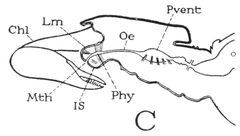
Prokoeneniidae can be distinguished from the other in Palpigradi, Eukoeneniidae, by subtle morphological differences in the arrangement of cheliceral teeth and the structure of the . Members of the family *Prokoenenia* possess distinct dental formulas on the movable and fixed cheliceral fingers. *Triadokoenenia* is distinguished by its tridentate cheliceral . Accurate identification to family level requires microscopic examination of these minute structures.
Images
Distribution
Records of Prokoeneniidae are sparse and scattered. The *Prokoenenia* has been reported from Europe, North America, and parts of Asia. *Triadokoenenia* is known from cave systems in Southeast Asia, including Thailand and Laos. The 's actual distribution is likely broader but undocumented due to sampling difficulties.
Similar Taxa
- EukoeneniidaeThe only other in Palpigradi; distinguished by cheliceral and flagellar structure. Prokoeneniidae generally have more complex cheliceral tooth arrangements.
More Details
Taxonomic history
The was erected by Condé in 1996 to accommodate previously placed in Eukoeneniidae that showed distinct morphological differences, particularly in cheliceral structure.
Research challenges
Only 13 observations are recorded in iNaturalist, reflecting the extreme difficulty of detecting and collecting these subterranean and arachnids. Most descriptions are based on very few specimens.