
Cladonychiidae
Hadži, 1935
cladonychiid harvestmen
Genus Guides
5- Briggsus
- Erebomaster(armoured harvestmen)
- Isolachus
- Speleonychia
- Theromaster(armoured harvestmen)
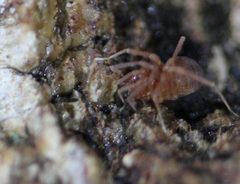
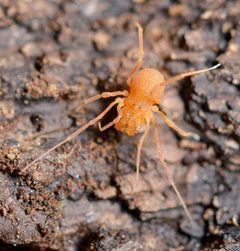
A small of harvestmen (suborder Laniatores) comprising approximately 33 described . Body length ranges from under two to about four millimeters. Members possess robust, spined and relatively short legs, though the second pair may reach two centimeters. Coloration varies from reddish brown to dark brown in surface-dwelling species to pale yellow in cave-dwelling forms.
Pronunciation
How to pronounce Cladonychiidae: /klædoʊˈnɪkɪˌaɪdiː/
These audio files are automatically generated. While they are not always 100% accurate, they are a good starting point.
Identification
Distinguished from related by the combination of small body size (2–4 mm), robust spined , and relatively short legs. Cave-dwelling are pale yellow and may lack , while surface species are darker pigmented. The second pair of legs may be disproportionately long (up to 2 cm) compared to other leg pairs.
Images
Habitat
Surface-dwelling occur in terrestrial environments; cave-dwelling species inhabit subterranean systems.
Distribution
Southern Europe and the United States.
Similar Taxa
- TravuniidaeFormerly contained several now placed in Cladonychiidae; Travuniidae now restricted to three Balkan genera (Travunia, Trojanella, Dinaria)
More Details
Taxonomic history
The underwent substantial revision, with Peltonychia, Holoscotolemon, Erebomaster, Theromaster, Speleonychia, Briggsus, and Isolachus transferred from Travuniidae and the former Pentanychidae. The type genus Cladonychium is now synonymized with Erebomaster.
Fossil record
The extinct Proholoscotolemon is known from Baltic amber.
Etymology
The name derives from the former type Cladonychium, from Greek 'branched claw'.