Trechaleidae
Simon, 1890
trechaleid spiders, longlegged water spiders, fishing spiders
Genus Guides
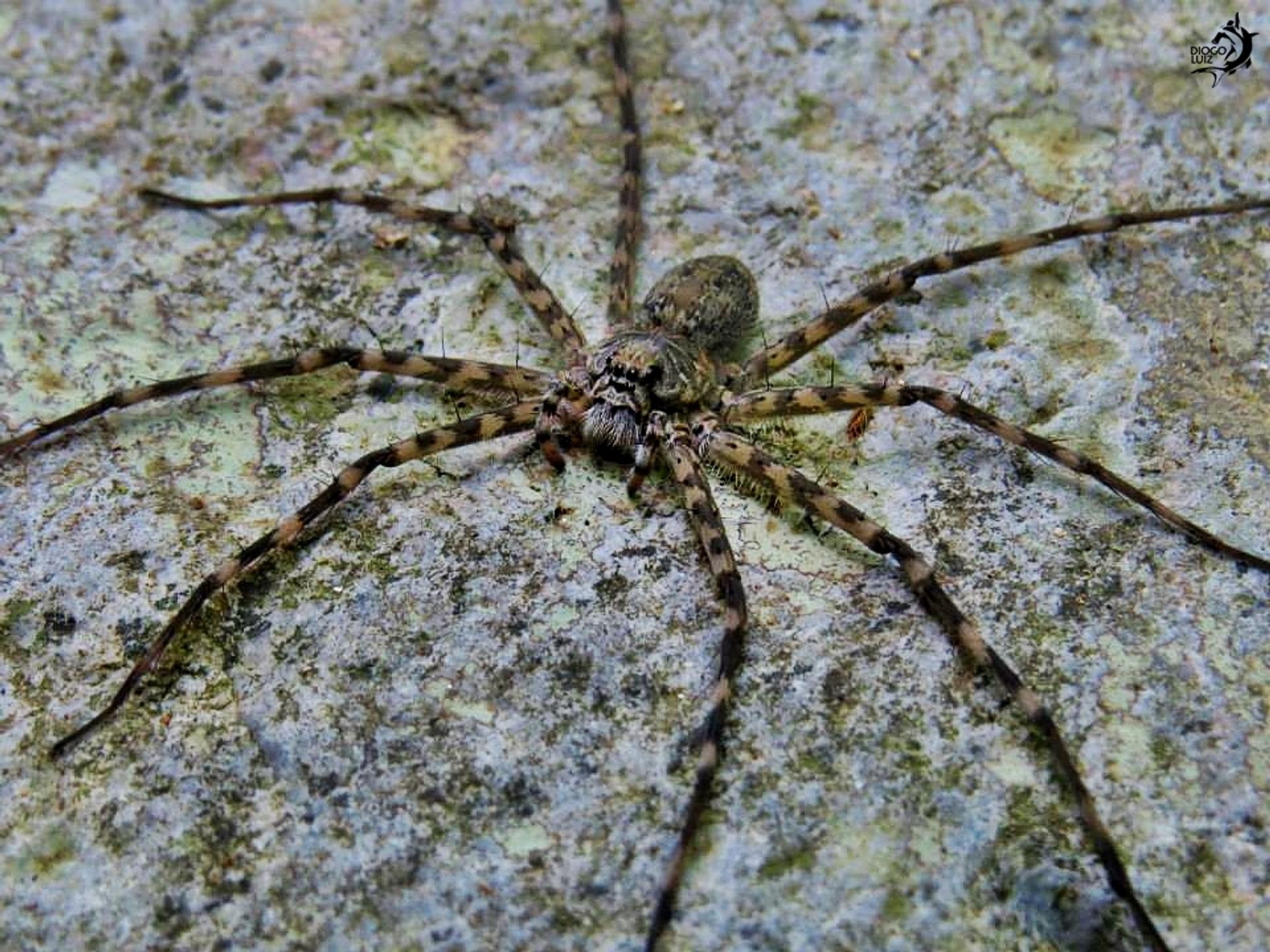
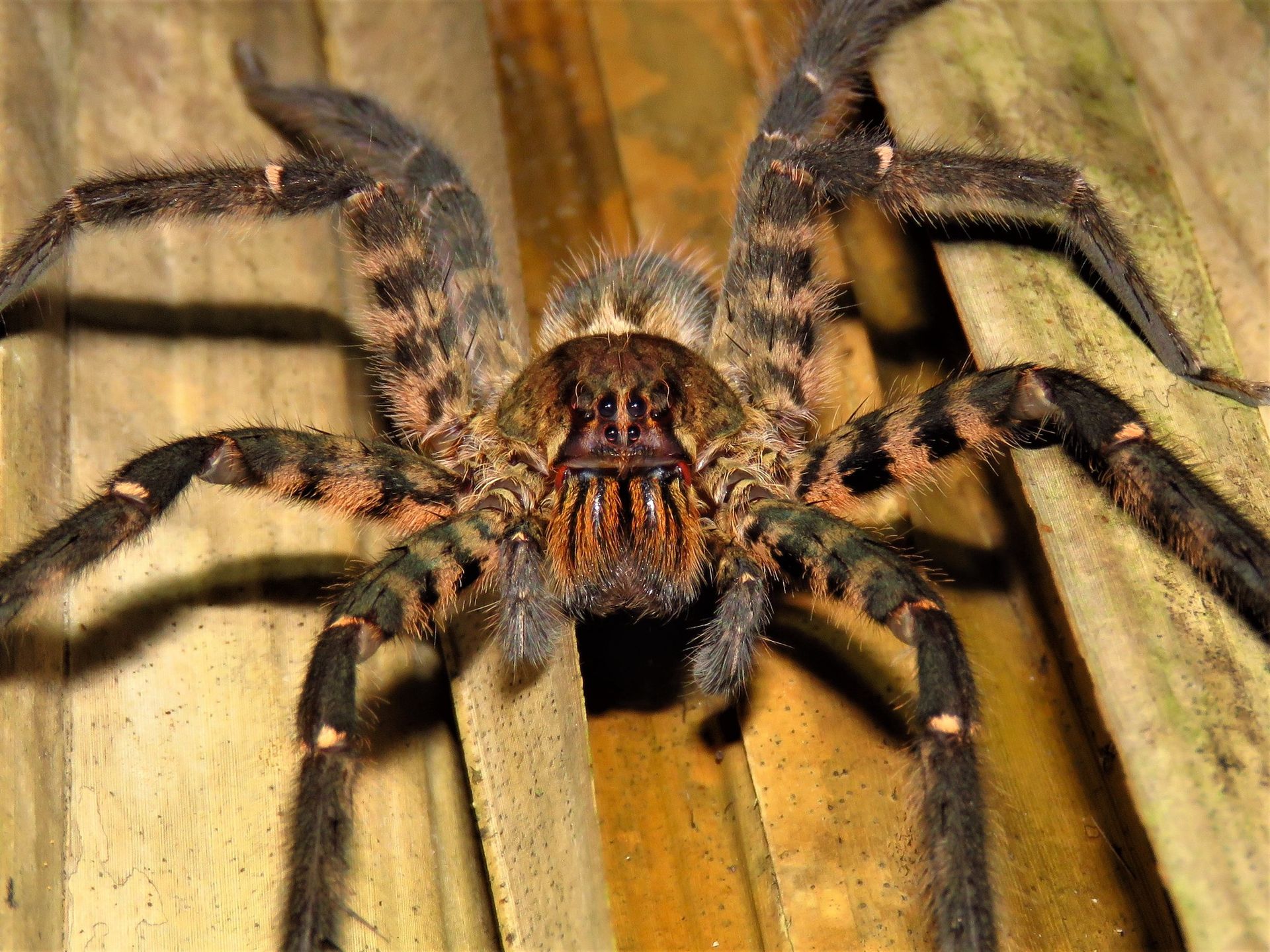
1Trechaleidae is a of araneomorph spiders comprising approximately 140 described across 18 . The family is predominantly Neotropical in distribution, with members found in Central and South America, though two Asian genera (Shinobius and Metashinobius) occur in Japan and China. Members are semi-aquatic or associated with wet , with some genera known for fish . The family is closely related to Pisauridae and Lycosidae within the superfamily Lycosoidea.
Pronunciation
How to pronounce Trechaleidae: /trɛˈkalɪ.iˌdaɪ/
These audio files are automatically generated. While they are not always 100% accurate, they are a good starting point.
Identification
Trechaleidae can be distinguished from related in the Lycosoidea by a combination of morphological features: secondary with grate-shaped tapetum, and specific cheliceral tooth arrangements (e.g., 4 retromarginal teeth in some vs. 3 in others). The family lacks the nursery web characteristic of Pisauridae and differs from Lycosidae in eye arrangement and associations. Asian genera (Shinobius, Metashinobius) differ from Neotropical genera in geographic distribution and subtle morphological details of male genitalia.
Images
Habitat
Predominantly semi-aquatic or associated with wet environments including mangrove forests, tropical rainforests, inundation forests, and areas near streams or water bodies. Some inhabit terrestrial vegetation such as bromeliads and bananas. The Asian Metashinobius has been collected at 1712m elevation in montane regions of China.
Distribution
Central and South America (majority of diversity); also present in southern Mexico, Central America, the West Indies, Japan (Shinobius orientalis), and China (Shinobius cona in Xizang, Metashinobius in Guizhou). The is absent from most of North America north of Mexico and from Europe, Africa, Australia, and Antarctica.
Diet
; members of the Cupiennius feed on insects and small vertebrates. Multiple genera have been documented capturing small fish in the wild, with fish prey averaging 2.2 times the spider's body length. Fish has been observed in Trechaleidae, Pisauridae, and Lycosidae within the Lycosoidea.
Behavior
wandering that do not construct prey-capture webs; some ambush prey from vegetation. Members of the Shinobius construct funnel-shaped webs. Females carry sacs attached to their . Some species swim, dive, or walk on water surfaces.
Human Relevance
The Cupiennius has been studied for venom composition, with novel toxins (ChiaTx1, ChiaTx2) showing against insects and mammals. Venom research has potential applications in understanding spider toxin evolution and developing bioactive compounds.
Similar Taxa
- PisauridaeAlso called 'fishing spiders' and contains fish-predating such as Dolomedes and Nilus; distinguished by nursery web and different arrangements.
- LycosidaeWolf spiders share the Lycosoidea superfamily and some fish-predating ; differ in burrowing , pattern, and primarily terrestrial associations.
More Details
Taxonomic History
First described by Eugène Simon in 1890. The has undergone revision with the number of recognized fluctuating between 16-18. placement remains unresolved for Asian genera Shinobius and Metashinobius.
Fish Predation
Fish by Trechaleidae is part of a broader pattern in the Lycosoidea superfamily. While less frequently reported than in Pisauridae, Trechaleidae have been documented capturing fish in natural settings across their Neotropical range.
Sources and further reading
- BugGuide
- Wikipedia
- GBIF taxonomy match
- iNaturalist taxon
- NCBI Taxonomy
- Catalogue of Life
- Trechaleidae Archives - Entomology Today
- Spiders that Prey on Fish Twice their Size are Found Worldwide
- Metashinobius gen. nov., the second Asian genus with uncleared subfamily placement of Trechaleidae (Araneae, Lycosoidea) from southwest China, with the description of a new species.
- Cupiennius spiders (Trechaleidae) from southern Mexico: DNA barcoding, venomics, and biological effect.
- First record of the spider family Trechaleidae Simon, 1890 (Araneae) from China.