
Stemmops
O. Pickard-Cambridge, 1894
Species Guides
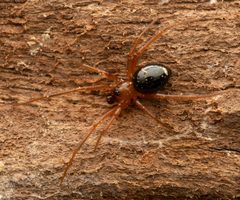
1Stemmops is a of small comb-footed spiders (Theridiidae: Spintharinae) first described in 1894. The genus contains approximately 27 , with the majority distributed in the Americas from the United States through Central America to Brazil, and a smaller number of species in East Asia including China, Japan, Korea, and Laos. One species, S. satpudaensis, has been recorded from India.
Pronunciation
How to pronounce Stemmops: //ˈstɛm.ɒps//
These audio files are automatically generated. While they are not always 100% accurate, they are a good starting point.
Identification
Stemmops are small theridiid spiders. Specific diagnostic features distinguishing Stemmops from other theridiid require examination of genitalic and detailed somatic characters; published taxonomic keys focus on male and female epigynal structures.
Images
Habitat
Has been observed under stones. Specific microhabitat preferences for most remain poorly documented.
Distribution
Primarily Neotropical and Nearctic: United States, Mexico, Central America, Caribbean (Cuba, Bahamas, St. Vincent), and South America (Brazil, Bolivia, Chile, Colombia, Venezuela). Also occurs in East Asia: China, Japan, Korea, Laos, and India (S. satpudaensis).
Similar Taxa
- ChrosiothesBoth were revised together by Levi (1964) and share Spintharinae placement; distinguished by genitalic and somatic
- Cabello described in same revision as Stemmops by Levi (1964) based on American specimens; closely related within Spintharinae
More Details
Taxonomic history
Levi (1955) revised Stemmops for North America, Central America, and the West Indies; Levi (1964) expanded treatment to include South American and established related Chrosiothes and Cabello. Chinese species were described by Zhu (1998) and more recently by Rajoria (2015) for India and additional Chinese species in 2023.
Species diversity
Brazil contains the highest with at least 11 described ; several species have been described relatively recently (Santanna & Rodrigues 2018 added five new Brazilian species).