
Neospintharus furcatus
(O. Pickard-Cambridge, 1894)
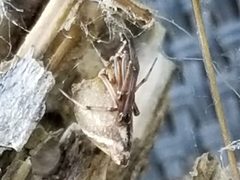
Neospintharus furcatus is a of cobweb spider in the Theridiidae. It is primarily kleptoparasitic, meaning it steals prey from the webs of other spiders rather than building its own capture web. The species has been recorded from the United States through Central America to El Salvador and the Caribbean.
Pronunciation
How to pronounce Neospintharus furcatus: //ˌniːoʊˈspɪnθərəs fərˈkeɪtəs//
These audio files are automatically generated. While they are not always 100% accurate, they are a good starting point.
Identification
in the Neospintharus are small theridiids with distinctive morphological features including a comb-like row of serrated bristles on the of the fourth leg (a calamistrum). Neospintharus furcatus can be distinguished from by specific genitalic , particularly the forked (furcate) structure of male or female that gives the species its name. Accurate identification typically requires microscopic examination.
Images
Distribution
Recorded from the United States, Mexico, Central America (to El Salvador), and the Caribbean Sea region. GBIF records indicate presence in Middle America and the Caribbean.
Diet
Primarily kleptoparasitic; steals prey from the webs of other spiders rather than capturing prey directly.
Behavior
Exhibits kleptoparasitic , living in or near the webs of other spider and feeding on prey captured by the spider. This behavior reduces the need to construct elaborate prey-capture webs.
Ecological Role
Acts as a kleptoparasite in spider , potentially influencing the foraging success and energy budgets of spiders. The ecological impacts of this kleptoparasitism on host have not been quantified.
Similar Taxa
- Other Neospintharus speciesCongeneric share the kleptoparasitic habit and general theridiid body plan; require genitalic examination for definitive separation.
- Theridiidae kleptoparasites in genera Argyrodes and FaiditusThese also contain kleptoparasitic cobweb spiders with similar ; differ in body shape, arrangement, and tarsal comb structure.
More Details
Taxonomic history
Originally described by O. Pickard-Cambridge in 1894. The Neospintharus was historically confused with related theridiid genera, but modern recognizes it as distinct based on genitalic and somatic .