
Usofila
Keyserling, 1891
American long-legged cave spiders
Species Guides
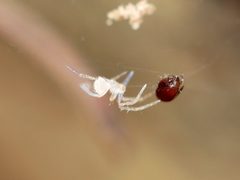
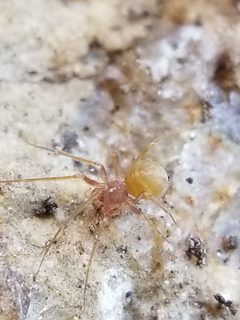
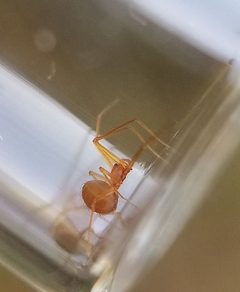
2Usofila is a of cave-dwelling spiders in the Telemidae, originally described by Eugen von Keyserling in 1891. These spiders are characterized by their elongated legs and obligate cave . The genus was transferred from Ochyroceratidae to Telemidae in 1973 based on morphological revisions. All are restricted to North America, with most found in the United States.
Pronunciation
How to pronounce Usofila: //ˌjuːsɒˈfiːlə//
These audio files are automatically generated. While they are not always 100% accurate, they are a good starting point.
Identification
Distinguished from other telemid by genitalic and chaetotaxy patterns. The genus Telemofila, formerly considered congeneric, was separated based on distinct morphological features. Usofila pecki was transferred to Telemofila, establishing this as a distinct genus. Identification to level requires examination of male and female .
Images
Appearance
Spiders with notably elongated legs relative to body size, a trait characteristic of cave-adapted telemid spiders. Body is small and compact. are reduced or absent, consistent with troglomorphic to dark environments. Coloration is pale, lacking pigmentation typical of surface-dwelling spiders.
Habitat
Obligate cave-dwellers (troglobites) found exclusively in subterranean environments including caves, lava tubes, and deep rock crevices. Requires stable humidity and darkness. Not found in surface .
Distribution
to North America. All occur in the United States. Usofila pacifica extends northward into Canada and Alaska, representing the northernmost range of the .
Behavior
Sedentary web-builders in cave environments. Constructs small, irregular webs on cave walls and ceilings to capture prey.
Ecological Role
in cave , contributing to nutrient cycling in energy-limited subterranean .
Human Relevance
No direct economic or medical significance. Of interest to cave biologists and arachnologists studying troglomorphic evolution and cave biodiversity.
Similar Taxa
- TelemaAlso in Telemidae, but differs in genitalic structure and geographic distribution (Old World tropics vs. North America)
- TelemofilaFormerly included in Usofila, separated based on distinct morphological characters; U. pecki was transferred to this
More Details
Taxonomic History
Originally described in Ochyroceratidae in 1891, transferred to Telemidae by Lehtinen in 1973. This reclassification reflected improved understanding of telemid and .
Conservation Status
As obligate cave-dwellers with restricted ranges, may be vulnerable to cave disturbance, groundwater pollution, and climate change affecting cave microclimates. No formal assessments published.