
Naphrys pulex
(Hentz, 1846)
flea jumping spider
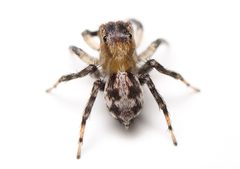
Naphrys pulex is a small jumping spider (Salticidae) native to eastern North America. Males measure approximately 4 mm in body length, while females are larger at 4.6–6.1 mm. The exhibits cryptic coloration with a yellowish bar-shaped mark on the and spotted, ringed legs. First described by Nicholas Marcellus Hentz in 1846, it was transferred to the Naphrys in 1981. The species is primarily known for its - diet.
Pronunciation
How to pronounce Naphrys pulex: /ˈnæfrɪs ˈpjuːlɛks/
These audio files are automatically generated. While they are not always 100% accurate, they are a good starting point.
Identification
Distinguished from by larger female size and shape of male palpal bulb. Most similar to Naphrys acerba, from which it differs in these characters. The combination of cryptic coloration with distinct abdominal bar mark and leg patterning aids field recognition among eastern Nearctic salticids.
Images
Appearance
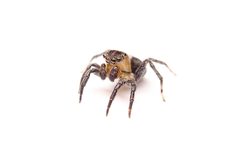
Small jumping spider with cryptic coloration. Males: total length ~4 mm, ~2 mm; leg length order IV > III > I > II. Females: total length 4.6–6.1 mm, carapace 2.0–2.4 mm. bears yellowish bar-shaped mark. Legs display spots and rings. Female coloration similar to males but less distinct.
Habitat
Found on walls, grass, leaf litter, ground surfaces, and tree trunks. Occupies varied terrestrial microhabitats in forested and open environments. No specific microhabitat specialization documented beyond general ground-dwelling and climbing tendencies.
Distribution
Native to Canada and the United States, primarily in the eastern regions. Canadian records from Manitoba and Ontario. Distribution centered in eastern Nearctic, with western limits poorly defined.
Diet
Feeds mainly on ants. among salticids.
Behavior
Nocturnally active on building exteriors; observed sheltering on walls during night hours. Hunting involves visual stalking typical of salticids, directed toward prey. Males use modified palpal bulbs for sperm transfer during mating.
Ecological Role
of ants; contributes to in ground and arboreal strata. Part of predator guild in eastern North American forests and anthropogenic environments.
Human Relevance
Occasionally encountered on building exteriors at night; harmless to humans. Subject of citizen science observations (iNaturalist records exceed 11,000). No documented economic or medical significance.
Similar Taxa
- Naphrys acerbaSimilar size range and eastern Nearctic distribution; distinguished by smaller female size and different male palpal bulb
More Details
Taxonomic history
Originally described as Attus pulex (1846), subsequently placed in Habrocestum, then transferred to Naphrys following revision in 1981
Observation notes
Despite activity typical of salticids, has been documented as active on building exteriors at night, suggesting flexible activity patterns