
Cheliferoides longimanus
Gertsch, 1936
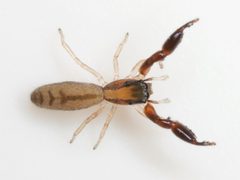
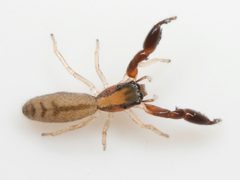
Cheliferoides longimanus is a of jumping spider in the Salticidae, first described by Gertsch in 1936. It is known from the United States, with 41 observations recorded on iNaturalist. As a salticid, it possesses the characteristic and jumping locomotion typical of this family. The Cheliferoides is distinguished by its elongated , which give the group its name—derived from Greek roots meaning 'claw-bearer'.
Pronunciation
How to pronounce Cheliferoides longimanus: //ˌkɛlɪfɛˈrɔɪdiːz ˌlɒŋɡɪˈmeɪnəs//
These audio files are automatically generated. While they are not always 100% accurate, they are a good starting point.
Identification
The Cheliferoides is characterized by notably elongated (hence 'longimanus' and the genus name meaning 'claw-bearer'), which serve as a primary distinguishing feature from other salticid genera. Specific diagnostic characters for C. longimanus itself are not documented in the provided sources.
Images
Distribution
United States; North America. GBIF records confirm presence in the USA.
More Details
Taxonomic etymology
The name Cheliferoides derives from Greek 'chelē' (claw) + 'phoros' (bearing) + '-oides' (resembling), referring to the elongated, claw-like . The specific epithet 'longimanus' (Latin: long hand) reinforces this characteristic.
Data availability
Despite 41 iNaturalist observations, detailed biological information for this appears sparse in accessible literature. Most sources provide only taxonomic placement and geographic presence.