
Chalcoscirtus
Bertkau, 1880
Species Guides
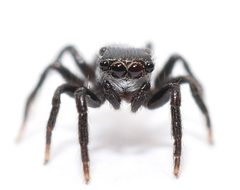
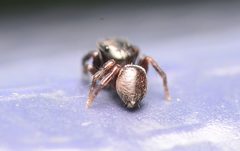
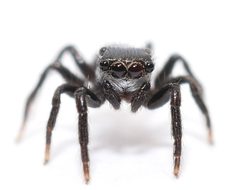
1Chalcoscirtus is a of jumping spiders (Salticidae) established by Philipp Bertkau in 1880. The name derives from Ancient Greek 'chalc-' () and 'scirt-' (leap), referring to the metallic coloration and characteristic jumping . The genus comprises approximately 45 distributed primarily across Eurasia, with limited representation in North America. Species occupy diverse from lowland steppes to high alpine zones.
Pronunciation
How to pronounce Chalcoscirtus: //ˌkælkəˈskɜːrtəs//
These audio files are automatically generated. While they are not always 100% accurate, they are a good starting point.
Identification
Chalcoscirtus are distinguished from other salticid by a combination of genitalic characters, particularly male palpal . The genus is characterized by a metallic sheen, often coppery or bronze, reflected in its etymology. Species-level identification requires examination of copulatory organs; external somatic characters alone are generally insufficient. The genus is most readily separated from superficially similar salticids such as Sitticus and Pellenes by detailed palpal structure and epigynal configuration.
Images
Habitat
occur in diverse terrestrial including alpine meadows, rocky steppes, forest edges, and tundra zones. Several species are adapted to high-elevation environments, with records from montane and subalpine regions. Chalcoscirtus glacialis and related inhabit cold-adapted environments including tundra and glacial margins. Ground-dwelling habits predominate, with spiders typically found on rocks, low vegetation, or bare soil surfaces.
Distribution
Primary distribution spans the Palearctic region, with highest in Central Asia, the Caucasus, and mountainous regions of southern Siberia. European representation includes scattered records from the Alps, Pyrenees, and Mediterranean basin. North American occurrence is limited to northern regions: Alaska, Canada, and the northern contiguous United States. The southernmost records are from Egypt, Israel, and the United Arab Emirates; eastern extent reaches Japan and Vietnam.
Behavior
Jumping spiders in this exhibit typical salticid visual hunting , relying on acute to detect and pursue prey. ground-dwelling habits are prevalent. No specific behavioral studies for Chalcoscirtus have been documented; generalizations from congeneric behavior are not supported.
Similar Taxa
- SitticusOverlapping Palearctic distribution and similar ground-dwelling habits; distinguished by male palpal and epigynal structure.
- PellenesShared preferences in steppe and alpine zones; separated by differences in arrangement details and genitalic characters.
More Details
Etymology
The name combines Ancient Greek 'chalc-' (χαλκός, /bronze) and 'scirt-' (σκίρτημα, leap/jump), describing the metallic coloration and salticid jumping .
Taxonomic History
Bertkau established the in 1880 with Chalcoscirtus infimus as type . Significant revisionary work by Marusik, Logunov, and colleagues in the 1990s–2000s expanded the genus and clarified species boundaries, particularly for Central Asian .