
Admestina
G. W. Peckham & E. G. Peckham, 1888
Species Guides
3- Admestina archboldi
- Admestina tibialis
- Admestina wheeleri(thick-legged jumping spider)
Admestina is a of minute jumping spiders (Salticidae) to North America. The genus contains three , each occupying distinct latitudinal bands across the United States and southern Canada. Members are characterized by their small, flattened bodies adapted for hiding in tree bark crevices. The genus was established by George and Elizabeth Peckham in 1888.

Pronunciation
How to pronounce Admestina: /ædˈmɛstɪnə/
These audio files are automatically generated. While they are not always 100% accurate, they are a good starting point.
Identification
The three are externally similar and best distinguished by geographic range and examination of genitalia. A. archboldi occurs in the southern United States (Florida to Texas), A. wheeleri in the northern United States and Canada (Massachusetts to North Dakota, Ontario), and A. tibialis in the intermediate zone (Florida to Connecticut).
Images
Appearance
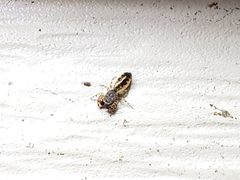
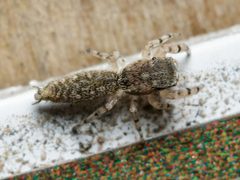
Small, flat-bodied jumping spiders measuring less than 4.5 mm in length. The is distinctly flattened, an for crevice-dwelling. The first pair of legs is the stoutest, with noticeably thickened tibiae in both sexes. All three share similar external .
Habitat
Arboreal; associated with trees. Specimens are typically collected by beating tree branches, suggesting occupation of or bark microhabitats. The flattened body form indicates specialization for hiding within bark crevices.
Distribution
to North America. A. archboldi: southern United States (30th to 25th parallels). A. wheeleri: northern United States and Ontario, Canada (roughly following 45th parallel). A. tibialis: eastern United States between the ranges of the other two .
Life Cycle
Females deposit 4 to 20 within bark crevices.
Behavior
Little documented. Specimens are typically encountered by beating tree branches, indicating arboreal habits. Oviposition occurs in bark crevices.
Similar Taxa
- AdmesturiusOriginally included A. bitaeniatus, which was transferred to this separate South American by Galiano in 1988 based on distinct morphological features.
More Details
Taxonomic history
The South American Admesturius bitaeniatus was originally described in Admestina but was transferred to the newly established Admesturius by María Elena Galiano in 1988, restricting Admestina to North America.