
Prodidomus
Hentz, 1847
Species Guides
1Prodidomus is a of long-spinneret ground spiders in the Prodidomidae, first described by Nicholas Marcellus Hentz in 1847. The genus comprises 54 as of September 2025. Members are small spiders, with males measuring 1.9–4.3 mm and females 1.8–5.0 mm in total length. They are distinguished by their elongated lateral , which measure 10–20% of abdominal length, and their distinctive arrangement with greatly enlarged, canoe-shaped lateral eyes.
Pronunciation
How to pronounce Prodidomus: //proʊˈdɪdəməs//
These audio files are automatically generated. While they are not always 100% accurate, they are a good starting point.
Identification
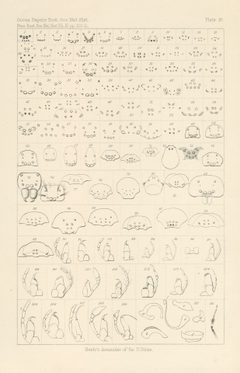
Distinguished from other ground spiders by the combination of extremely long lateral (10–20% of abdominal length) and the unique pattern: lateral eyes are greatly enlarged and canoe-shaped while posterior eyes remain small. The contiguous arrangement of four eyes on each side forming a triangle, with posterior lateral eyes as the largest, provides a key diagnostic feature. The low, curved and widely divergent are additional identifying characteristics.
Images
Appearance
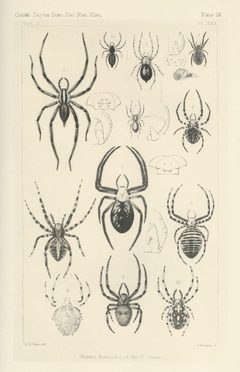
Small spiders with total length of males 1.9–4.3 mm and females 1.8–5.0 mm. broadly oval, frontally straight, weakly covered with grey setae or bare; longitudinal fovea absent or weak. pale, with or without scattered, short, recumbent, grey setae. lateral 10–20% of abdominal length, contiguous or slightly separated, with long piriform gland spigots. Legs laterigrade with leg formula 4123 and sparse setae with few weak spines.
Distribution
Africa, Europe, Oceania, Asia, South America, the United States, the Greater Antilles, and Saint Helena.
Similar Taxa
- Other Prodidomidae generaShare -level traits of elongated , but Prodidomus is distinguished by specific arrangement with canoe-shaped lateral eyes and spinneret proportions
- Other ground spiders (Gnaphosidae)Superficially similar and habitus, but lack the characteristic long lateral and distinctive pattern of Prodidomus
More Details
Taxonomic history
First described by Nicholas Marcellus Hentz in 1847, making it one of the earlier described spider in North American arachnology
Species diversity
Contains 54 as of September 2025, indicating substantial diversification across its broad geographic range