
Phonognathidae
Simon, 1894
Leaf-curling Orbweavers
Genus Guides
1- Zygiella(Missing-sector Orbweb Spiders)
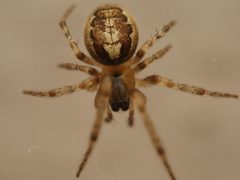
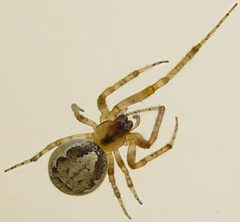
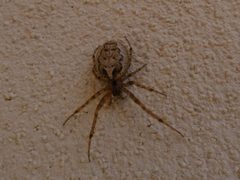
Phonognathidae is a of orb-weaving spiders resurrected at family rank in 2018 based on phylogenomic analysis. The family was originally described by Simon in 1894 but had been treated as a synonym of Araneidae. It is now classified within the clade Orbipurae alongside Araneidae and Nephilidae. Members are commonly known as leaf-curling orbweavers and are distinguished by their habit of constructing retreats within curled leaves.
Pronunciation
How to pronounce Phonognathidae: //ˌfoʊ.nəɡˈneɪ.θɪˌdiː//
These audio files are automatically generated. While they are not always 100% accurate, they are a good starting point.
Identification
Distinguished from other orb-weaving by the combination of: retreat construction within curled or folded leaves (the source of their ), and phylogenetic placement within Orbipurae. Previously confused with Araneidae due to similar web architecture. Molecular data and phylogenomic analysis are required for definitive identification to family level.
Images
Distribution
Global distribution in tropical and subtropical regions. Specific range details for the as currently circumscribed are incompletely documented due to recent taxonomic reclassification.
Behavior
Constructs retreats within curled or folded leaves, a reflected in their 'leaf-curling orbweavers.' Web-building behavior is characteristic of orb-weaving spiders, though specific architectural details distinguishing Phonognathidae webs from related require further study.
Similar Taxa
- AraneidaePreviously treated as congeneric; distinguished by phylogenomic data and leaf-curling retreat
- NephilidaeSister within Orbipurae; distinguished by extreme sexual size dimorphism and giant orb webs in Nephilidae versus leaf-curling retreats in Phonognathidae
More Details
Taxonomic History
Phonognathidae was originally described by Simon in 1894, subsequently reduced to synonymy under Araneidae, and resurrected as a valid in 2018 by Bond et al. based on phylogenomic analysis using 367 anchored hybrid enrichment markers. The reclassification was justified by clade age (estimated at over 100 million years), monophyly, and diagnosability.
Phylogenetic Position
is classified within the newly proposed clade Orbipurae, which also contains Araneidae and Nephilidae. This clade represents a group of orb-weaving spiders with ancient evolutionary origins.