
Escaphiella
Platnick & Dupérré, 2009
Species Guides
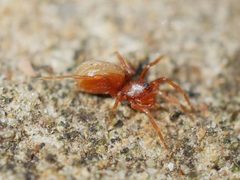
1- Escaphiella hespera(goblin spider)
Escaphiella is a of dwarf goblin spiders in the Oonopidae, established in 2009 by arachnologists Norman Platnick and Nadine Dupérré. The genus contains 36 described distributed across the Americas, from the southwestern United States through Mexico, Central America, and into South America. Most species were described in the original 2009 revision, though some were transferred from other genera based on newly recognized morphological characters.
Pronunciation
How to pronounce Escaphiella: /ɛsˈkæfiˌɛlə/
These audio files are automatically generated. While they are not always 100% accurate, they are a good starting point.
Identification
Escaphiella are distinguished from other oonopid by specific genitalic characters, particularly in the male and female internal genitalia, as detailed in the 2009 revision by Platnick & Dupérré. The genus was erected to accommodate species previously placed in Scaphiella and related genera, based on phylogenetic analysis of morphological traits. Accurate identification to species level requires examination of reproductive structures under microscopy.
Images
Distribution
The Americas, including the southwestern United States, Mexico, Central America, and South America (Argentina, Brazil). distribution is documented from specific localities including Acapulco (Mexico), Bahia and Blumenau (Brazil), and various Caribbean and Pacific coastal regions.
Similar Taxa
- ScaphiellaHistorically confused with Escaphiella; several Escaphiella were originally described in Scaphiella before the 2009 generic revision separated the two based on genitalic .
More Details
Taxonomic History
The was established in a comprehensive 2009 revision that described 31 new and transferred 5 previously described species from other genera. The name Escaphiella reflects its close relationship to Scaphiella while distinguishing it as a separate lineage.