
Oecobius maculatus
Simon, 1870
Oecobius maculatus is a small spider in the Oecobiidae, commonly known as wall spiders or disc web spiders. Native to the Mediterranean region extending to Azerbaijan, it has been introduced to the United States and Mexico. The is characterized by its flattened body form and association with human structures.
Pronunciation
How to pronounce Oecobius maculatus: //iːˈkoʊ.bi.əs mæˈkjuː.lə.təs//
These audio files are automatically generated. While they are not always 100% accurate, they are a good starting point.
Identification
Distinguished from other Oecobiidae by subtle morphological features; precise identification requires examination of genitalia. The name "maculatus" (spotted) may refer to patterning, though this is not clearly documented. Distinguished from the congeneric Oecobius navus, which is also widespread and , by differences in genitalic and geographic origin.
Images
Appearance
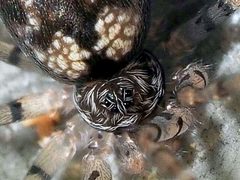
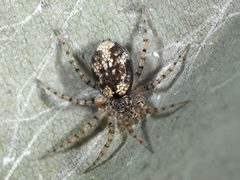
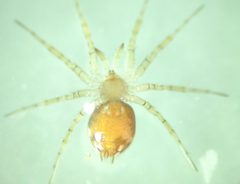
Small spider with a flattened body. Typical of the Oecobius, which are characterized by their disc-shaped, flattened adapted for living in narrow crevices. Specific coloration and pattern details for this are not well documented in available sources.
Habitat
Associated with human structures and built environments. Found in crevices, cracks, and under loose bark or stones. The ' flattened body form is an to living in narrow spaces.
Distribution
Native to the Mediterranean region east to Azerbaijan. Introduced and established in the United States and Mexico. Records from Switzerland are flagged as doubtful.
Behavior
Constructs small, flat, disc-shaped webs in crevices and corners. Typical of Oecobiidae, which are known as "wall spiders" for their habit of living on vertical surfaces and in narrow cracks.
Human Relevance
A that has been introduced to North America, where it inhabits human structures. Not considered medically significant or economically important.
Similar Taxa
- Oecobius navusWidespread congeneric also associated with human structures; distinguished by genitalic and geographic patterns
More Details
Taxonomic Note
The was described by Eugène Simon in 1870. The Oecobius currently contains approximately 80 species, many of which are poorly known and difficult to distinguish without detailed examination.
Introduction History
Introduced in North America represent human-mediated , typical of many Oecobiidae which readily colonize ships, cargo, and transported goods.
Sources and further reading
- BugGuide
- GBIF taxonomy match
- iNaturalist taxon
- Catalogue of Life
- oetophorus_maculatus_barron_holotype_female_ucrc_ent_60260_lateral.jpg | Entomology Research Museum
- Primary Type List | Entomology Research Museum
- Inducing Mosquitoes to Lay Eggs Aids in Insecticide Resistance Testing
- New Analysis Refines Taxonomy of Dermestid Beetles
- Big, black (and red), and beautiful! | Beetles In The Bush
- dermestid beetles - Entomology Today