
Pardosa pauxilla
Montgomery, 1904
thin-legged wolf spider
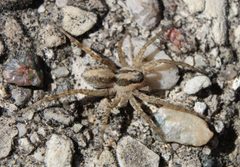
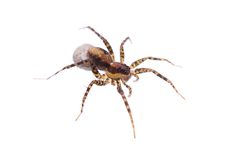
Pardosa pauxilla is a small wolf spider in the Lycosidae, first described by Montgomery in 1904. It belongs to the Pardosa, commonly known as thin-legged wolf spiders, characterized by distinctive long leg spines perpendicular to the leg axis. The is documented from the United States, with 626 observations recorded on iNaturalist. Like other Pardosa species, it likely inhabits diverse environments including wetlands, woodlands, and open fields.
Pronunciation
How to pronounce Pardosa pauxilla: //pɑːrˈdoʊsə pɔːkˈsɪlə//
These audio files are automatically generated. While they are not always 100% accurate, they are a good starting point.
Identification
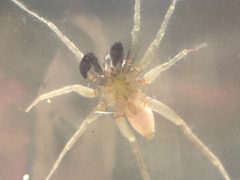
Distinguished from other wolf spider by long leg spines perpendicular to leg axis (most other wolf spiders have shorter spines parallel to leg surface). Hind legs particularly long, making spines on this pair easiest to observe. Distinguished from other Pardosa only by microscopic examination of genitalia: female structure or male . arrangement typical of wolf spiders: four small eyes in two rows, two large eyes, and posterior lateral eyes set well back on .
Images
Habitat
Specific preferences for P. pauxilla are not documented. The Pardosa is found in diverse habitats including rocky streambeds, marshy wetlands, lake beaches, woodland floors, leaf litter, fields, agricultural edges, and high-elevation mountain areas.
Distribution
United States. GBIF records indicate presence in USA and North America.
Life Cycle
Typical of wolf spiders: females carry sac attached to . Spiderlings likely emerge from egg sac and may ride on mother's back briefly. Development includes egg, spiderling, and stages.
Behavior
Active hunters that prowl rather than building webs to capture prey. Females carry sac attached to , a characteristic wolf spider .
Ecological Role
in terrestrial . Prey likely includes small insects and other arthropods.
Similar Taxa
- Other Pardosa speciesNearly identical in general appearance; require microscopic genitalia examination for definitive identification.
- Other Lycosidae generaDistinguished by leg spine orientation: Pardosa has long perpendicular spines versus shorter parallel spines in other .
More Details
Taxonomic note
-level identification within Pardosa is challenging and requires examination of genital structures under magnification. Field identification to species is generally not reliable.
Observation data
iNaturalist records 626 observations for this , indicating it is documented but not necessarily common or well-studied.