
Pardosa modica
(Blackwall, 1846)
Little Banded Wolf Spider
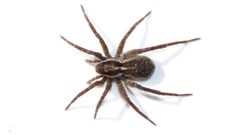
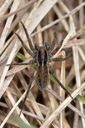
Pardosa modica is a of wolf spider in the Lycosidae, commonly known as the Little Banded Wolf Spider. It is one of approximately 65 Pardosa species recognized in the United States and 75 species north of Mexico. As a member of the 'thin-legged wolf spiders,' it is characterized by distinctive leg spines and is typically small to medium in size. The species is distributed across the United States and Canada, including records from Alberta and Manitoba.
Pronunciation
How to pronounce Pardosa modica: //pɑrˈdoʊsə ˈmɒdɪkə//
These audio files are automatically generated. While they are not always 100% accurate, they are a good starting point.
Identification
As a Pardosa , P. modica can be identified by long spines on the legs that are almost perpendicular to the leg axis, in contrast to other wolf spiders where spines are shorter and more parallel to the leg surface. The hind pair of legs is notably long, with spines often most visible on this pair. The is higher than in most other wolf spiders, with sides of the nearly vertical. Mature males may exhibit different color patterns from females. Definitive species identification requires microscopic examination of genitalia: females possess a paired , while males have highly modified resembling small boxing gloves.
Images
Distribution
Found in the United States and Canada. Specific Canadian provincial records include Alberta and Manitoba.
Similar Taxa
- Pardosa algensMember of the same 'modica group' of Holarctic Pardosa ; both occur in arctic and subarctic North America
- Other Pardosa speciesShare the diagnostic long perpendicular leg spines and elevated ; require genitalia examination for definitive separation
Sources and further reading
- BugGuide
- Wikipedia
- GBIF taxonomy match
- iNaturalist taxon
- NCBI Taxonomy
- Catalogue of Life
- Could Insects Be Used to Feed Pets and Other Animals?
- Bug Eric: July 2015
- Bug Eric: Wasp Wednesday: Ageniella accepta/conflicta
- Bug Eric: Spider Sunday: Spring Spiders
- Adelgidae | Beetles In The Bush
- Studies on species of Holarctic Pardosa groups (Araneae, Lycosidae). III. Redescriptions of Pardosa algens (Kulczynski), P. septentrionalis (Westring), and P. sodalis Holm