
Pityohyphantes costatus
(Hentz, 1850)
hammock spider
Pityohyphantes costatus, commonly known as the hammock spider, is a sheetweb weaver in the Linyphiidae. The name derives from its distinctive web architecture, which resembles a suspended hammock. It occurs primarily in coniferous forests of North America, though it has also been found in hardwood . The name translates from Greek as 'pine weaver,' reflecting its association with coniferous vegetation.
Pronunciation
How to pronounce Pityohyphantes costatus: /ˌpɪti.aɪˈfænˌtiːz kɔˈstætəs/
These audio files are automatically generated. While they are not always 100% accurate, they are a good starting point.
Identification
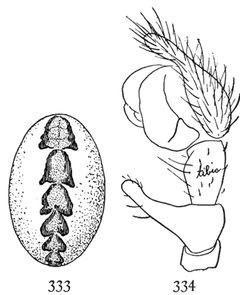
Reliable identification requires examination of external genitalia. Distinguished from cobweb weavers (Theridiidae) by presence of prominent setae on legs; cobweb weavers have spine-free legs. The web structure also differs: hammock spiders build slightly convex sheet platforms suspended by a maze of threads above, while cobweb weavers construct irregular three-dimensional tangles. The abdominal pattern is consistent across the but not diagnostic to species level without genital examination.
Images
Appearance
Small spider with mature females measuring 5-7 millimeters in body length; males slightly smaller. The displays a consistent and distinctive pattern: a brown or reddish jagged-edged longitudinal band on an ivory or pale background. Legs bear prominent setae (spines), a characteristic feature distinguishing sheetweb weavers from cobweb weavers.
Habitat
Primarily coniferous forests, particularly pine-dominated , though also occurs in hardwood forests. Webs are constructed in foliage well above ground level, on fences, or on exterior surfaces of buildings and other manmade structures. Spiders typically position themselves on the underside of peripheral foliage rather than hanging in the web center.
Distribution
North America; recorded from United States and Canada (Alberta). Most in occur in western and northern coniferous forests; P. costatus specifically documented from western Massachusetts and Colorado Front Range.
Seasonality
Mating occurs in spring. and immatures may overwinter under bark or stones on the ground.
Diet
Insects, likely small that fall from branches above the web onto the sheet platform.
Life Cycle
Mating takes place in spring. Female attaches sac to twig or other object at web periphery. Both and immatures may pass winter under bark or ground stones.
Behavior
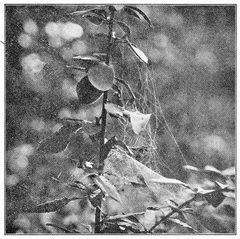
Constructs slightly convex sheetweb suspended by maze of threads above the platform; web does not typically sag into a true hammock shape. Spider hangs upside down beneath sheet. Usually conceals itself on underside of peripheral foliage rather than occupying web center. Mature males abandon web-building to wander in search of mates and do not feed during this period.
Ecological Role
of small insects; contributes to dynamics in forest .
Human Relevance
Occasionally found on building exteriors and fences; harmless to humans due to small size.
Similar Taxa
- Theridiidae (cobweb weavers)Similar web-building habit but distinguished by spine-free legs and irregular three-dimensional web architecture versus prominent leg setae and sheet platform with supporting threads in Pityohyphantes
- Other Linyphiidae (sheetweb weavers)Web architecture differs: bowl and doily spiders (Frontinella pyramitela) build distinct dome and sheet combination; dome spiders construct different web geometries
Misconceptions
Despite the 'hammock spider,' the web is typically slightly convex rather than concave like a true hammock. The spider does not rest in the web center for relaxation but uses it as a prey-capture platform.
More Details
Etymology
name Pityohyphantes derives from Greek 'pitys' (pine) + 'hyphantes' (weaver), referencing association with coniferous forests. 'hammock spider' refers to web's suspended, sheet-like appearance.
Subspecies
Two recognized: Pityohyphantes costatus costatus (Hentz, 1850) and Pityohyphantes costatus annulipes (Banks, 1892)
Sources and further reading
- BugGuide
- Wikipedia
- GBIF taxonomy match
- iNaturalist taxon
- NCBI Taxonomy
- Catalogue of Life
- Bug Eric: Spider Sunday: Hammock Spiders
- Bug Eric: One Night, One House, Seventeen Spider Species
- Bug Eric: City Nature Challenge 2023 Recap
- I Brake for Dung Beetles! | Beetles In The Bush
- behavior | Beetles In The Bush | Page 6
- scarabs | Beetles In The Bush | Page 4