
Phantyna
Chamberlin, 1948
Species Guides
1- Phantyna bicornis(mesh web weaver)
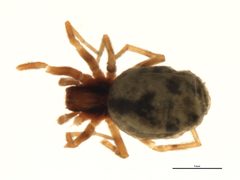
Phantyna is a of cribellate araneomorph spiders in the Dictynidae, established by R. V. Chamberlin in 1948. The genus comprises fourteen distributed primarily in North America, with some species ranging into Central and South America, including one species from the Galápagos Islands. These spiders are characterized by the presence of a cribellum, a silk-producing organ used to produce hackled band silk.

Pronunciation
How to pronounce Phantyna: /ˈfæntɪnə/
These audio files are automatically generated. While they are not always 100% accurate, they are a good starting point.
Identification
Members of Phantyna possess a cribellum, a diagnostic feature of the Dictynidae, which appears as a small, plate-like spinning organ to the . The can be distinguished from related dictynid genera through specific morphological characters established in Chamberlin's original description, though detailed diagnostic features require examination of genitalia and other microscopic structures.
Images
Distribution
of Phantyna occur from the United States and Canada south through Mexico to Brazil and Venezuela, with one species (P. remota) recorded from the Galápagos Islands. The shows highest diversity in the southwestern and south-central United States, with multiple species.
Similar Taxa
- Other Dictynidae generaPhantyna shares the cribellate condition and general body plan with other dictynid spiders; differentiation requires examination of genital and detailed somatic characters.
More Details
Nomenclatural history
The type , Phantyna micro, was originally described as Lathys micro by Chamberlin & Ivie in 1944 before being transferred to Phantyna when the was erected in 1948.