
Archoleptonetidae
Gertsch, 1974
archoleptonetid spiders
Genus Guides
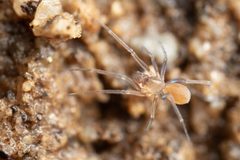
1Archoleptonetidae is a of small spiders in the order Araneae, established by Gertsch in 1974. The family contains two —Archoleptoneta and Darkoneta—with eight described distributed from the western United States through Central America to Panama. These spiders were formerly classified as a of Leptonetidae before being elevated to family status based on morphological and phylogenetic evidence.

Pronunciation
How to pronounce Archoleptonetidae: //ˌɑːrk.oʊ.ˌlɛp.toʊ.ˈnɛt.ɪˌdiː//
These audio files are automatically generated. While they are not always 100% accurate, they are a good starting point.
Identification
Separation from Leptonetidae relies on morphological characters including details of arrangement, placement, and male structure. within the are distinguished by subtle differences in genitalic and geographic distribution. The two differ in somatic characters: Archoleptoneta species are known from the United States, while Darkoneta species occur from the United States south to Panama.
Images
Habitat
have been collected from caves and mesic forest . Darkoneta stridulans from Panama was described from cloud forest. Specific microhabitat preferences for most species remain poorly documented.
Distribution
Western United States (California, Texas), southern Mexico, Guatemala, and Panama. The northernmost records are from California and Texas; the southernmost record is Darkoneta stridulans from Panama.
Behavior
Darkoneta stridulans possesses stridulatory organs, suggesting sound production as a behavioral trait. The function of this stridulation—whether for defense, courtship, or other purposes—has not been determined.
Similar Taxa
- LeptonetidaeFormerly included Archoleptonetidae as a ; distinguished by differences in arrangement, pattern, and male genitalic structure.
More Details
Taxonomic history
Archoleptonetidae was originally described as a of Leptonetidae by Gertsch in 1974. It was elevated to status by Ledford and Griswold in 2010 based on phylogenetic analysis and morphological distinctiveness.
Collection rarity
Only 14 observations are recorded in iNaturalist as of the source date, indicating these spiders are rarely encountered, possibly due to small size, cryptic habits, and specialized requirements.