
Hypsosinga pygmaea
(Sundevall, 1831)
spotted false pajama spider, small orbweaver
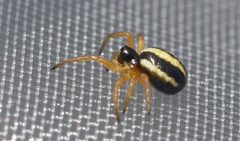
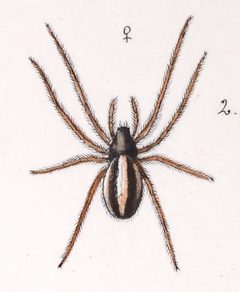
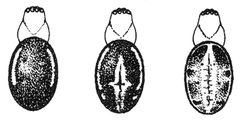
Hypsosinga pygmaea is a small orb-weaving spider in the Araneidae, commonly known as the spotted false pajama spider or small orbweaver. It constructs complete orb webs and is frequently collected by sweep-netting grasses and herbs. The has a remarkably wide distribution across the Northern Hemisphere and has been introduced to South Africa, where it occupies grassland and savanna .
Pronunciation
How to pronounce Hypsosinga pygmaea: //ˌhɪp.soʊˈsɪŋ.ɡə pɪɡˈmiː.ə//
These audio files are automatically generated. While they are not always 100% accurate, they are a good starting point.
Images
Habitat
Occupies grassland and savanna biomes. Constructs orb webs, sometimes with a retreat. Most commonly sampled by sweep-netting grasses and herbs.
Distribution
Native to North America, Europe, Turkey, Israel, Caucasus, Russia (extending from Europe to Far East), Iran, Central Asia, China, Korea, and Japan. Introduced to South Africa, where it has been recorded in Mpumalanga, Gauteng, and KwaZulu-Natal provinces at elevations from 47 to 1,471 meters above sea level. Specific South African localities include Loskop Dam Nature Reserve, Nelspruit, Irene, Ezemvelo Nature Reserve, Roodeplaatdam Nature Reserve, and Ndumo Game Reserve.
Behavior
Constructs complete orb webs, probably sometimes with a retreat. Males and females both known.
More Details
Conservation status
Listed as Least Concern by the South African National Biodiversity Institute due to its wide global range. Protected in several South African reserves including Loskop Dam Nature Reserve, Ezemvelo Nature Reserve, Roodeplaatdam Nature Reserve, Ndumo Game Reserve, and Blouberg Nature Reserve. No conservation actions recommended.
Subspecies
Three recognized: H. p. pygmaea (Sundevall, 1831), H. p. nigra (Simon, 1909), and H. p. nigriceps (Kulczynski, 1903).
Taxonomic notes
known from both sexes. First described by Sundevall in 1831.
Sources and further reading
- BugGuide
- Wikipedia
- GBIF taxonomy match
- iNaturalist taxon
- NCBI Taxonomy
- Catalogue of Life
- Tiny Insect, Big Questions: Is the World's Smallest Dragonfly Splitting Into Two Species?
- A suitable ode to Warren Knaus | Beetles In The Bush
- Surveying for the Maerdy Monster Millipede - Buglife Blog - Buglife
- Cynnal arolygon Miltroed Anghenfil y Maerdy - Buglife Blog - Buglife
- Glorious Earthworms - Buglife Blog - Buglife
- Arctic botany amongst the fjords