
Cercidia prominens
(Westring, 1851)
Carmine Orbweaver
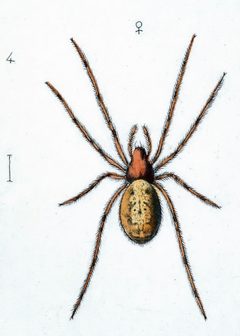
Cercidia prominens is a small orb-weaver spider ( Araneidae) known for its distinctive brick-red to orange coloration. Females measure 3.8–5.4 mm in body length, with males slightly smaller at 3.6–4.1 mm. The was first described by Niklas Westring in 1851 and underwent several taxonomic revisions before receiving its current name from Tamerlan Thorell in 1869. It occupies a broad geographic range across the Northern Hemisphere.
Pronunciation
How to pronounce Cercidia prominens: /sərˈsɪdiə ˈprɒmɪnɛnz/
These audio files are automatically generated. While they are not always 100% accurate, they are a good starting point.
Identification
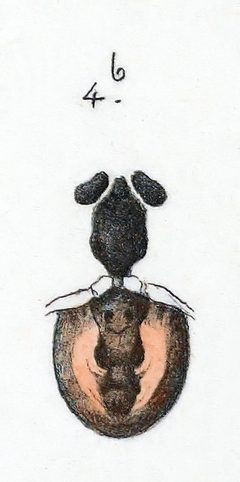
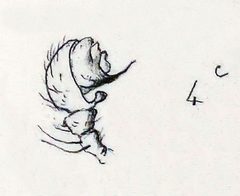
Distinguished from other small Araneidae by the combination of bright orange-red coloration, dark thoracic spot, and four dark spots on the . The Cercidia is separated from related genera by genitalic characters not visible in field observations. The 'brick red' thoracic coloration described by Westring is a notable field mark.
Images
Distribution
North America; Europe; Caucasus; Russia (European Russia to Far East); Kazakhstan; Iran; Flanders, Belgium. The spans a broad trans-Palearctic and Nearctic range.
More Details
Taxonomic history
The has undergone multiple generic placements. Westring originally described it as Epeira prominens (1851). Menge transferred it to his new Cerceis in 1866, but this name was preoccupied by a crustacean genus described in 1840. Thorell established the replacement name Cercidia in 1869.