
Labidostommatidae
Oudemans, 1904
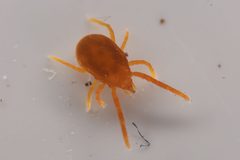
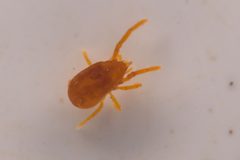
Labidostommatidae is a of acariform mites characterized by heavily armored bodies and predatory habits. Members are free-living with -shaped bodies completely covered by sclerotized plates. The family is placed in the infraorder Labidostommatina within the order Trombidiformes.
Pronunciation
How to pronounce Labidostommatidae: //læbɪdoʊˈstɒmətaɪˌdiː//
These audio files are automatically generated. While they are not always 100% accurate, they are a good starting point.
Identification
Distinguished from other prostigmatic mites by the combination of: complete of the body with plate-like covering (reticulated pattern often visible), presence of two or three , and two claws per . The heavily armored, plate-covered body separates them from softer-bodied trombidiform mites.
Images
Appearance
-shaped body completely covered with sclerotized plates, often displaying a reticulated pattern. Possesses two or three . Each bears two claws.
Distribution
Distribution records exist from Southeast Asia (SE); broader global distribution requires additional verification.
Diet
Predatory. Specific prey items not documented in available sources.
Behavior
Free-living. Not associated with permanent or attachment.
Ecological Role
Predatory mites that likely function as microarthropod in soil and litter .
Similar Taxa
- Other Trombidiformes familiesLabidostommatidae differs in having complete body with plate-like covering versus the softer, less heavily armored bodies typical of many other prostigmatic mites.
More Details
Taxonomic placement
The is the sole family in the superfamily Labidostommatoidea and infraorder Labidostommatina, indicating a distinct lineage within Prostigmata.
Included genera
BioLib lists Cornutella (questionable), Eunicolina Berlese, 1911, and Labidostomma Kramer, 1879 as included .