
Phthiracaridae
Perty, 1841
Genus Guides
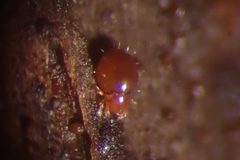
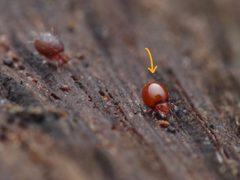
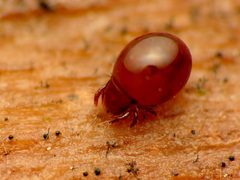
2Phthiracaridae is a of ptyctimous oribatid mites within the superfamily Phthiracaroidea. The family comprises approximately 7 and at least 710 described , making it one of the largest families of Euptyctima. Members are characterized by a retractable idiosoma (ptychoidy), a defensive where the body can fold to protect legs and mouthparts. The family has a nearly distribution with highest diversity in tropical and subtropical regions.
Pronunciation
How to pronounce Phthiracaridae: /ˈθɪrəkɛrɪˌdeɪ/
These audio files are automatically generated. While they are not always 100% accurate, they are a good starting point.
Identification
Phthiracaridae are distinguished from other ptyctimous mites by the combination of: complete ptychoidy with well-developed plates allowing complete enclosure of legs and gnathosoma; absence of genital and aggenital suckers; and specific arrangements of notogastral setae. Within the , are differentiated by prodorsal structures, notogastral carinae, and setal patterns. identification requires examination of microscopic features such as the shape of prodorsal , length and form of notogastral setae, and details of leg chaetotaxy.
Images
Habitat
have been documented from leaf litter in tropical and subtropical forests, coastal forest soil, and woody vegetation near coastlines. Collection records include leaf litter on islands, soil in estuarine coastal forests, and forested reserves.
Distribution
Nearly . Documented from: Thailand (Similan Islands), New Zealand (Auckland, Fiordland, Waikato), Northeast China, South Africa (Western Cape, southern, eastern and northeastern regions), Malaysia, Indonesia, and Scandinavia (Denmark, Norway, Sweden). Highest occurs in tropical and subtropical regions, with in coastal areas and woody vegetation zones.
Behavior
Ptychoidy—the ability to fold the body and enclose appendages within plates—represents a defensive against and desiccation. This complete body retraction distinguishes Phthiracaridae from partially ptyctimous groups.
Similar Taxa
- EuphthiracaridaeAlso ptyctimous mites in superfamily Euphthiracaroidea, but distinguished by incomplete ptychoidy and presence of genital suckers in most ; Phthiracaridae has complete ptychoidy and lacks genital suckers
- OribotritiidaePtyctimous mites with retractable idiosoma, but differ in notogastral setation patterns and details of plate structure; phylogenetically placed in separate superfamily Euphthiracaroidea
- SynichotritiidaeRelated ptyctimous in same infraorder Euptyctima, distinguished by distinct bothridial structures and prodorsal cristae arrangements; some show unusual clusters of bothridial brachytrachea not found in Phthiracaridae
More Details
Taxonomic composition
The includes seven recognized : Atropacarus, Hoplophorella, Hoplophthiracarus, Notophthiracarus, Phthiracarus (the type genus and second largest genus of ptyctimous mites), Rhacaplacarus, and Steganacarus. The genus Phthiracarus alone contains numerous with nearly distribution.
Endemism patterns
In South Africa, all 31 recorded of Notophthiracarus are either or , suggesting significant regional diversification in isolated .
Sources and further reading
- BugGuide
- Wikipedia
- GBIF taxonomy match
- iNaturalist taxon
- NCBI Taxonomy
- Catalogue of Life
- Three new species of the genus Austrophthiracarus from New Zealand (Acari: Oribatida: Phthiracaridae)
- Phthiracarus species (Acari, Oribatida, Phthiracaridae) from Northeast China with descriptions of two new species and a key to Chinese species
- New species of oribatid mites in the families Synichotritiidae and Phthiracaridae from Thailand, with a checklist of Thai Euptyctima (Acari: Oribatida: Euphthiracaroidea, Phthiracaroidea)
- New Notophthiracarus species (Acarina, Oribatida, Phthiracaridae) and overview of the distribution of the genus in South Africa