
Liacaridae
Sellnick, 1928
Genus Guides
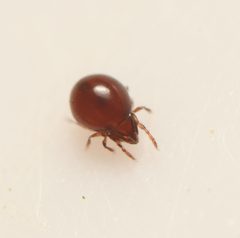
2Liacaridae is a of oribatid mites comprising approximately 7 and over 240 described . Members are small arachnids ( body length 445–735 μm) characterized by specific morphological features including lamellar and interlamellar setae arrangements. The family includes the fossil genus †Liacarus and extant genera such as Adoristes, Xenillus, and Dorycranosus. Species within this family exhibit in body size, with females typically larger than males.

Pronunciation
How to pronounce Liacaridae: //laɪəˈkærɪdiː//
These audio files are automatically generated. While they are not always 100% accurate, they are a good starting point.
Identification
Distinguished from other oribatid by the combination of: interlamellar setae shorter than ; translamella usually absent (variable); and the presence of a sclerotized semicircle to prodorsal seta le in juveniles. with thick legs and claws, especially leg I, and posteroventral anal opening aids in identification. body size ranges from 445–735 μm with females larger than males.
Images
Appearance
possess with interlamellar setae shorter than the lamella; translamella usually absent but may be incomplete or present as a thin line. Juveniles are unpigmented, oval in cross-section, with thin and smooth prodorsal and gastronotal setae. All stages bear a sclerotized semicircle located to each prodorsal seta le. Juveniles have relatively thick legs and claws, especially leg I, with smooth or short-barbed leg setae. Anal opening positioned posteroventrally.
Distribution
Records from Denmark (DK), Norway (NO), and Sweden (SE) based on GBIF data. Global distribution likely broader given 240+ described across 7 .
Diet
Life Cycle
Development includes larval and nymphal stages. Larva bears 11 pairs of gastronotal setae; nymphs bear 12 pairs of gastronotal setae without the d-series. Juveniles are unpigmented with relatively thick legs and claws.
More Details
Taxonomic Note
Adoristes (Gordeeviella) Shtanchaeva, Subías & Arillo, 2010 has been provisionally synonymized with Adoristes Hull, 1916 based on morphological ontogeny studies.