
Megalopodidae
Latreille, 1802
Genus Guides
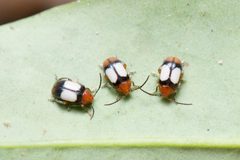
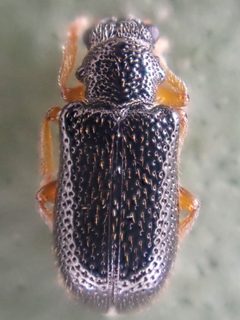
1is a small of leaf beetles containing approximately 30 and 582 worldwide, divided among three . The family was elevated from subfamily status within Chrysomelidae and is primarily distributed in circumtropical regions, with highest diversity in the Neotropical and Ethiopian biogeographic regions. The most diverse subfamily is Megalopodinae with 480 species.
Pronunciation
How to pronounce Megalopodidae: /mɛɡəloʊˈpɒdɪˌdiː/
These audio files are automatically generated. While they are not always 100% accurate, they are a good starting point.
Identification
can be distinguished from the closely related Chrysomelidae by their classification as a separate family-level , though external morphological characters require expert examination. The Zeugophorinae (containing the Zeugophora) has historically been treated as part of either Megalopodidae or Chrysomelidae, creating taxonomic confusion. Identification to genus and level requires reference to specialized keys and examination of male genitalia in some groups.
Images
Habitat
Forest fragments and vegetated areas where plants occur. In Brazil, have been collected in forest fragments of southwestern and western Paraná using and manual sampling.
Distribution
Primarily circumtropical distribution worldwide. Highest diversity occurs in the Neotropical biogeographic region, followed by the Ethiopian region. Present in Mexico (31 in 3 ), Brazil (147 species in 11 genera), Siberia and the Russian Far East (15 species in 3 genera), and the United States and Canada. Knowledge is geographically biased with significant gaps in many regions.
Diet
Herbivory on vascular plants. Larvae of some are leaf miners. Other larvae feed on stem tissue or bore into branches. Some larvae feed on pollen grains of conifer strobili. and larvae of Palophaginae feed on araucarian pollen in Australia.
Host Associations
- Solanaceae - plantmainly damaged by endophytic immatures that bore into branches
- Asteraceae - plantMastostethus pantherinus associated with this for the first time in Brazil
- Araucariaceae - plantPalophaginae feed on araucarian pollen
- Coniferae - plantlarvae feed on pollen grains of conifer strobili
Life Cycle
Larvae are endophytic, feeding internally in leaves, stems, or conifer strobili. Once fully grown, the larva drops to the ground and pupates in the soil.
Behavior
Endophytic larval feeding : larvae bore into plant tissues including leaves, stems, and branches. Some are economically important due to this boring damage.
Ecological Role
Herbivores on vascular plants. Endophytic feeding on plant tissues contributes to nutrient cycling and plant damage. Some are economically significant pests due to boring damage to commercially important plants.
Human Relevance
Economically important as pests due to endophytic larval feeding that damages Solanaceae and other crop plants. Damage occurs through boring into branches and stems.
Similar Taxa
- Chrysomelidae was previously treated as a within Chrysomelidae, and Zeugophorinae has been variously placed in either ; requires careful taxonomic examination to distinguish
- OrsodacnidaeAnother small leaf beetle historically associated with Chrysomelidae, with which shares superfamilial placement in Chrysomeloidea
More Details
Taxonomic history
was previously included as a within Chrysomelidae. The subfamily Zeugophorinae has also frequently been treated as a subfamily within Chrysomelidae rather than Megalopodidae. The contains three subfamilies: Megalopodinae (480 , 24 ), Zeugophorinae, and Palophaginae.
Knowledge gaps
Knowledge of is limited and remarkably biased by country. A significant increase in geographic and taxonomic information is needed to fill these gaps. plant relationships remain poorly documented for many .
Sources and further reading
- BugGuide
- Wikipedia
- GBIF taxonomy match
- iNaturalist taxon
- Catalogue of Life
- Diversity and distribution in the world of Megalopodidae Latreille (Coleoptera: Chrysomeloidea)
- Host plants of leaf beetle species occurring in the United States and Canada : (Coleoptera: Megalopodidae, Orsodacnidae, Chrysomelidae, excluding Bruchinae)
- Checklist of the family Megalopodidae Latreille (Coleoptera: Chrysomeloidea); a synthesis of its diversity and distribution
- Mexican leaf beetles (Coleoptera: Megalopodidae, Orsodacnidae, and Chrysomelidae): new records and checklist
- Review of leaf beetles of the family Megalopodidae (Coleoptera: Chrysomeloidea) from Siberia and the Russian Far East
- Megalopodidae (Insecta, Coleoptera): new occurrence and host plant records for Brazil
- A comparative study of the external male genitalia in the subfamily Zeugophorinae, and a new species of genus Zeugophora (Coleoptera, Megalopodidae) from China.
- Redescription of the Neotropical genus Agathomerus (Coleoptera, Megalopodidae, Megalopodinae) and description of three new species from Mexico.