
Douglasiidae
Douglas moths
Genus Guides
1is a small of micromoths in the order Lepidoptera, comprising approximately 32 across three extant . are minute with 6–15 mm wingspans, reduced hindwing venation, and long fringes. Larvae are specialized leaf miners or stem borers, primarily attacking plants in Boraginaceae, Lamiaceae, and Rosaceae. The family is predominantly Palearctic in distribution, with limited Nearctic representation.
Pronunciation
How to pronounce Douglasiidae: //ˈdʌɡ.ləˌzaɪ.iː.diː//
These audio files are automatically generated. While they are not always 100% accurate, they are a good starting point.
Identification
Distinguished from other Gracillarioidea by combination of reduced hindwing venation and long fringes. Tinagma (the largest genus) can be separated from Klimeschia and Protonyctia by geographic distribution: Tinagma occurs in both Palearctic and Nearctic regions, Klimeschia is exclusively Palearctic, and Protonyctia is restricted to Ecuador.
Images
Appearance
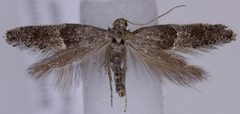
are minute with wingspans of 6–15 mm. Hindwings exhibit reduced venation and possess long fringes. Overall is characteristic of micromoths in the superfamily Gracillarioidea.
Distribution
Primarily Palearctic; limited Nearctic presence. Records confirmed from Denmark, Norway, and Sweden. Protonyctia occurs in Ecuador.
Diet
Larvae are leaf miners or borers, primarily in stems and petioles. Documented plant : Boraginaceae, Lamiaceae (Labiateae), and Rosaceae.
Host Associations
- Boraginaceae - larval
- Lamiaceae - larval
- Rosaceae - larval
Ecological Role
Larvae function as internal feeders (leaf miners and stem borers) on herbaceous plants, potentially influencing plant through tissue damage.
Similar Taxa
- GracillariidaeShared superfamily Gracillarioidea and leaf-mining larval habit; Gracillariidae is much larger and more diverse with different wing venation patterns
- BucculatricidaeAlso leaf-mining micromoths in Gracillarioidea; lack the pronounced hindwing fringes characteristic of