
Scolopendrellidae
Newport, 1844
Genus Guides
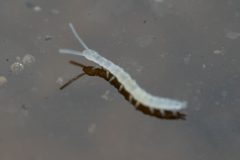
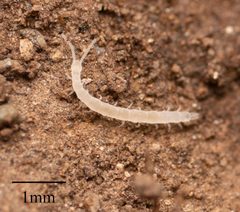
1Scolopendrellidae is a of pseudocentipedes in the class Symphyla, comprising nine and at least 97 described . Members are small soil-dwelling arthropods, typically measuring less than 4 mm in length. The family has a subcosmopolitan distribution, with the largest genus Symphylella containing at least 61 species. The family is distinguished by specific morphological traits including reduced or absent first pair of legs and poorly developed styli.
Pronunciation
How to pronounce Scolopendrellidae: //skəˌloʊpɛnˈdɛrɪlaɪdiː//
These audio files are automatically generated. While they are not always 100% accurate, they are a good starting point.
Identification
Distinguished from other by the reduced or absent first pair of legs (never more than half as long as the second pair), poorly developed or styli at leg bases, and not distinctly separated from neck. Antennal article count fewer than 20. with striated terminal area. First tergite variable in development. Symphylella specifically identified by chaetotaxy patterns, particularly chaetotaxy arrangement, and tergite process .
Images
Appearance
Small, pale arthropods measuring less than 4 mm in length. and neck not distinctly separated. with fewer than 20 articles, bearing two types of setae with small branched sensory organs on the most segment. Tergites number 15–24; first tergite variable from well developed to reduced. () with striated terminal area. First pair of legs reduced, never exceeding half the length of the second pair; in some or absent. Styli at leg bases poorly developed or rudimentary.
Habitat
Soil and leaf litter of broad-leaf forests and bamboo forests. Extracted from soil using Berlese-Tullgren funnels.
Distribution
Subcosmopolitan distribution. Symphylella and Scolopendrellopsis subcosmopolitan. Ribautiella in Neotropical and Afrotropical realms. Remysymphyla in Palearctic, Afrotropical, and Indomalayan realms. Geophilella in Nearctic and Palearctic. Neosymphyla in Afrotropical; Parviapiciella in Mediterranean region, North Africa, and central Europe; Scolopendrella in western Palearctic; Symphylellina in Loyalty Islands. Fossil record: Symphylella patrickmuelleri from Cenomanian-aged Burmese amber (~99 million years ago), Myanmar.
Life Cycle
Development includes stages with 7–10 pairs of legs, progressing through stages with 9 or 10 pairs before reaching adulthood with 12 pairs of legs.
Ecological Role
Common soil arthropods; component of soil fauna in forest .
Similar Taxa
- Other Symphyla familiesScolopendrellidae distinguished by reduced first leg pair and poorly developed styli; other typically have more developed first legs and styli.
More Details
Fossil Record
Fossils of symphylans are rare and limited to amber specimens. Symphylella patrickmuelleri from Burmese amber is the only described fossil in this , dating to approximately 99 million years ago (mid-Cretaceous, Cenomanian).
Taxonomic Diversity
Nine : Geophilella, Neosymphyla, Parviapiciella, Remysymphyla, Ribautiella, Scolopendrella, Scolopendrellopsis, Symphylella, Symphylellina. Symphylella is the largest genus with at least 61 ; Scolopendrellopsis has at least 17 species; Ribautiella has nine species.
Sources and further reading
- BugGuide
- Wikipedia
- GBIF taxonomy match
- iNaturalist taxon
- NCBI Taxonomy
- Catalogue of Life
- Two new species of the genus Symphylella (Symphyla, Scolopendrellidae) from East China
- Four new species of Symphylella (Symphyla, Scolopendrellidae) from Chongqing, southwest China with DNA barcoding analysis.
- Two new species of the genus Symphylella (Symphyla, Scolopendrellidae) from China and the significance of the frons chaetotaxy.