Desmonus
Cook, 1898
Species Guides
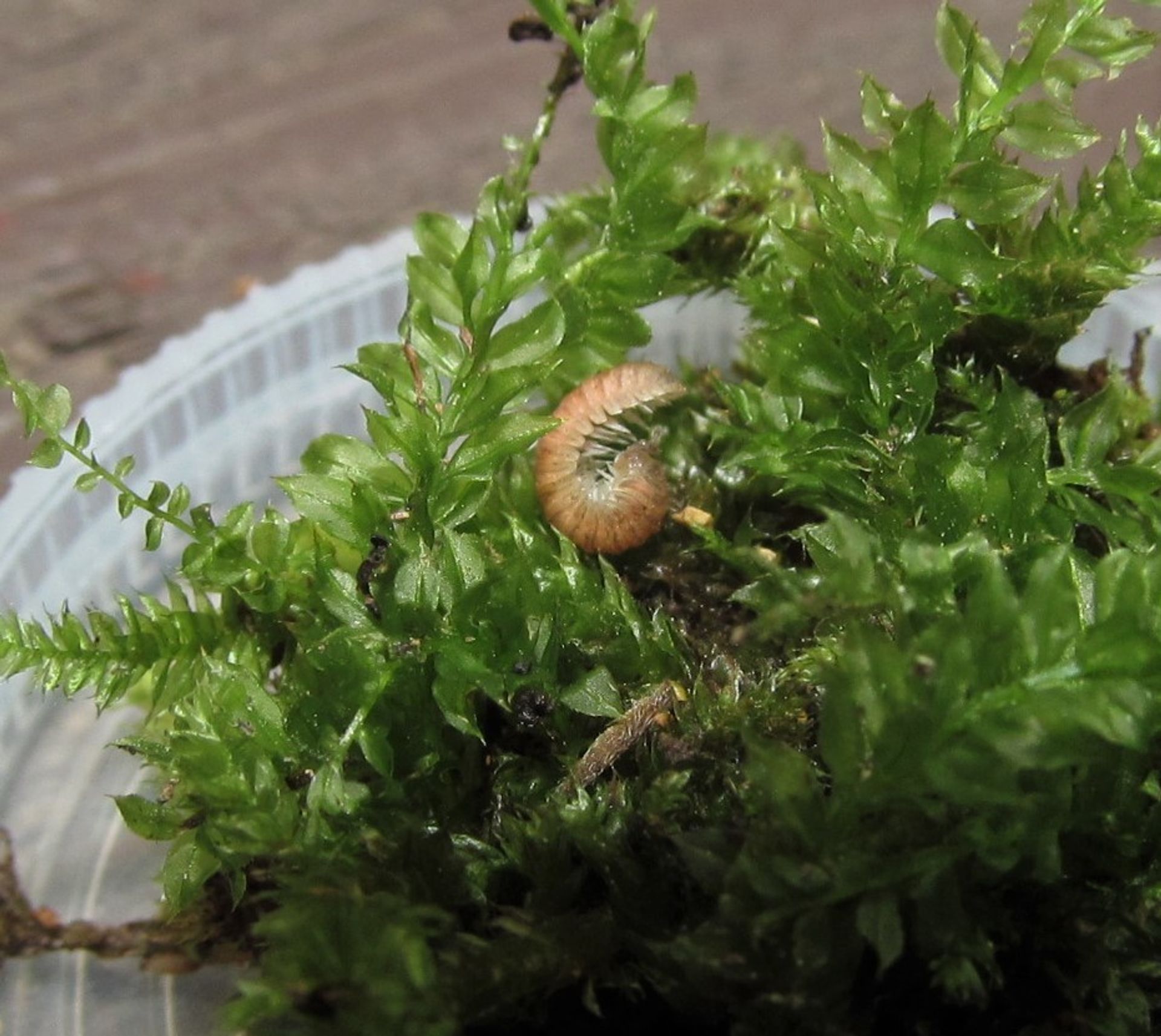
1Desmonus is a of flat-backed millipedes in the Sphaeriodesmidae, first described by Cook in 1898. The genus contains approximately 10 described distributed in the southeastern United States. Members of this genus belong to the order Polydesmida, characterized by their flattened body form and lateral extensions of the .
Pronunciation
How to pronounce Desmonus: /dɛsˈmoʊ.nəs/
These audio files are automatically generated. While they are not always 100% accurate, they are a good starting point.
Identification
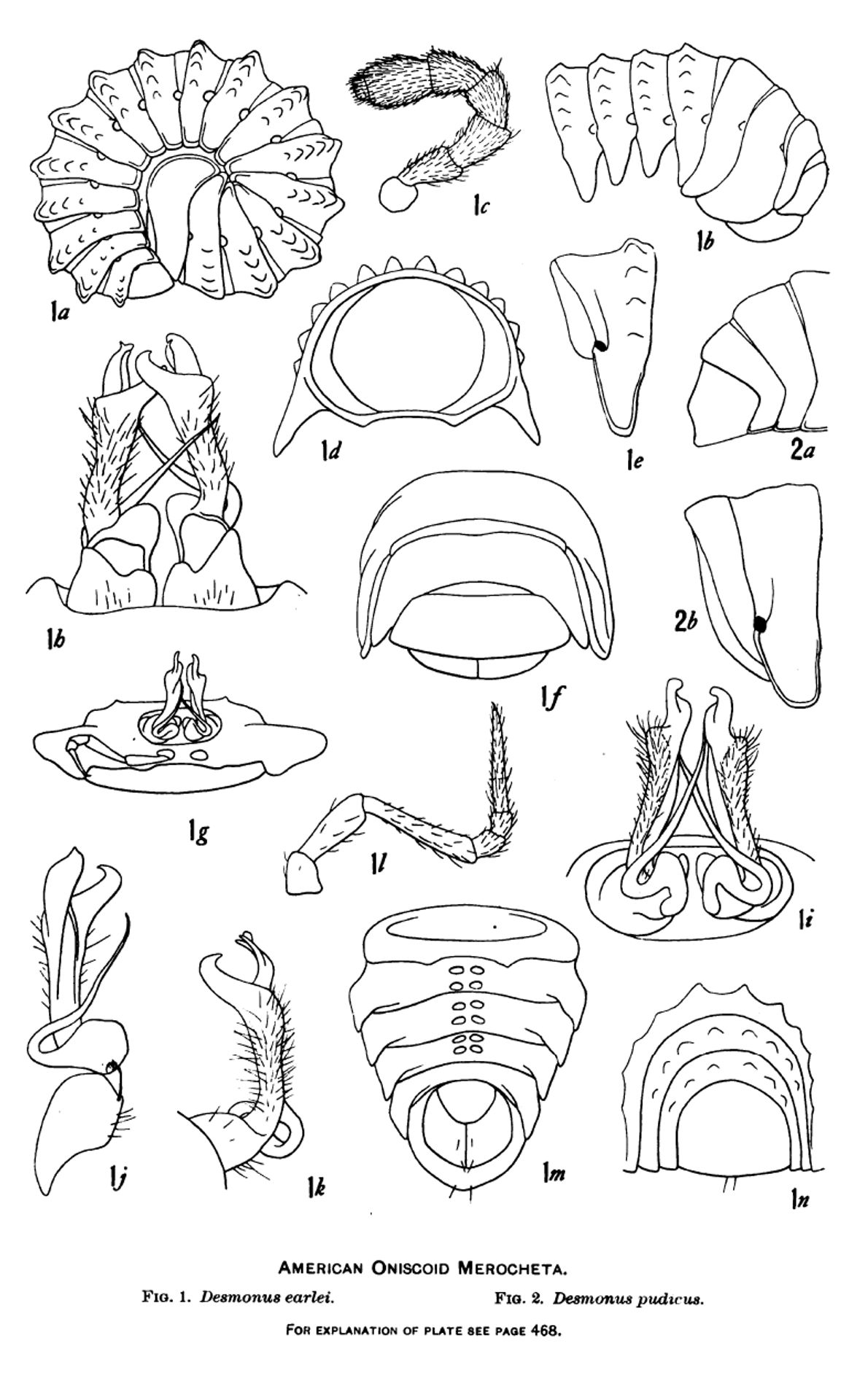
As flat-backed millipedes in the Sphaeriodesmidae, Desmonus possess a strongly flattened body with lateral keels (paranota) on most body segments. The family Sphaeriodesmidae is distinguished within Polydesmida by small body size and often compact, rounded body form. Specific identification to species within Desmonus requires examination of , which varies among the described species.
Images
Distribution
Documented from Alabama, Arkansas, Georgia, Florida, and Kentucky in the southeastern United States.
Similar Taxa
- Other Sphaeriodesmidae generaShare the -level characteristics of small, flattened millipedes with compact body form; distinguished by subtle morphological differences in structure and body proportions.
- Other Polydesmida familiesDiffer in body proportions, degree of flattening, and presence or development of paranota; Sphaeriodesmidae including Desmonus tend toward smaller, more compact forms compared to many other flat-backed millipedes.
More Details
Species diversity
The contains 10 described : D. acclivus, D. atophus, D. austrus, D. conjunctus, D. crassus, D. curtus, D. distinctus, D. earlei, D. inordinatus, and D. pudicus. Most species were described by Loomis (1943, 1959, 1966) and Causey (1958), with the earliest species described by Cook (1898) and Bollman (1888).