
Hemiscolopendra marginata
Say, 1821
eastern bark centipede
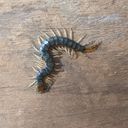
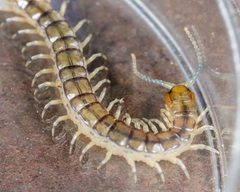
Hemiscolopendra marginata, the eastern bark , is a moderate-sized scolopendrid centipede native to the Eastern United States and parts of Mexico. It is commonly found sheltering beneath loose bark on dead or fallen trees. The is notable as the first centipede documented to exhibit in venom composition, with males and females producing substantially different toxin profiles. Females demonstrate maternal care by guarding and early juveniles.
Pronunciation
How to pronounce Hemiscolopendra marginata: /hɛmɪskoʊloʊˈpɛndrə mɑrdʒɪˈneɪtə/
These audio files are automatically generated. While they are not always 100% accurate, they are a good starting point.
Identification
Hemiscolopendra marginata can be distinguished from of Scolopendra by the absence of a distoventral spur on the first of the ambulatory legs. Examined specimens range from 27.8 to 54.8 mm in length and 2.7 to 7.8 mm in width.
Images
Habitat
Shelters beneath loose bark on dead or fallen trees; also found within decaying wood.
Distribution
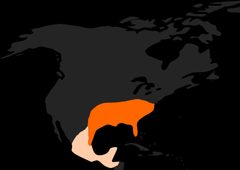
Eastern United States; parts of Mexico.
Diet
Predatory; feeds primarily on .
Life Cycle
Females exhibit maternal care, guarding and early juveniles.
Ecological Role
of in forest floor and decaying wood .
Similar Taxa
- Scolopendra speciesHemiscolopendra marginata lacks the distoventral spur on the first of the ambulatory legs that is present in Scolopendra .