
Tricholepidion
Wygodzinsky, 1961
Tricholepidion
Species Guides
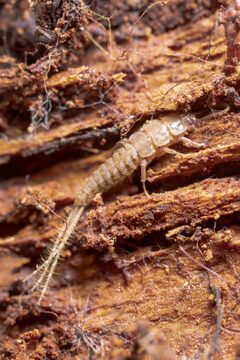
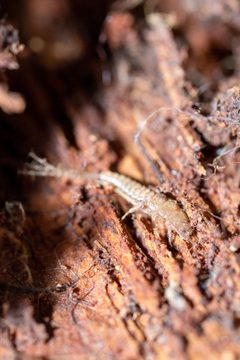
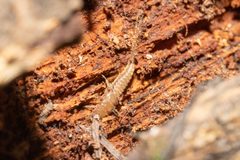
1Tricholepidion is a of wingless insects in the order Zygentoma, containing a single described , T. gertschi. It is to the northern coast of California and represents the sole living member of the Lepidotrichidae, with fossil relatives known from Eocene amber. Its taxonomic position is uncertain; molecular studies have sometimes recovered it as more distantly related to than other Zygentoma, which would render Zygentoma . The genus is considered a 'living fossil' due to its isolated phylogenetic position and the extinction of all other family members.
Pronunciation
How to pronounce Tricholepidion: /ˌtraɪkoʊˌlɛpɪˈdiɔn/
These audio files are automatically generated. While they are not always 100% accurate, they are a good starting point.
Identification
Distinguished from other Zygentoma by five-segmented , whereas and other Zygentoma have three- or two-segmented tarsi. Body are absent. Each contains approximately 40 , with three ocelli present. Wingless. These traits align it more closely with winged insects in tarsal structure despite its condition.
Images
Habitat
Found under dead bark and in rotting wood of conifers within mesophytic forests.
Distribution
Native to the northern coast of California, Western North America.
Behavior
Mating has been studied and compared with other Apterygota; specific details of the behavior are not accessible from available sources.
Human Relevance
Of scientific interest as a 'living fossil' and for studies of insect and the evolution of winglessness. No known economic or medical significance.
Similar Taxa
- LepidotrixExtinct from Eocene European amber, considered the only other member of Lepidotrichidae; known only from fossils.
- Other Zygentoma (silverfish families)Distinguished by five-segmented (vs. two- or three-segmented) and absence of body .
- Archaeognatha (bristletails)Distinguished by five-segmented and different structure; have large with many and lack the reduced ommatidial count seen in Tricholepidion.