
Paracapnia
Hanson, 1946
small winter stoneflies
Species Guides
5- Paracapnia angulata(angulate snowfly)
- Paracapnia baumanni(Mendocino Snowfly)
- Paracapnia boris(Colusa Snowfly)
- Paracapnia humboldta(Redwood Snowfly)
- Paracapnia opis(Northeastern Snowfly)
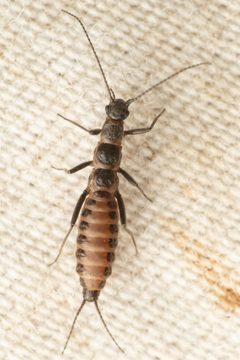
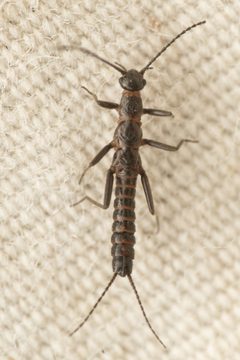
Paracapnia is a of small winter stoneflies in the Capniidae, native to North America. The genus contains at least five described , including the angulate snowfly (Paracapnia angulata) and the northeastern snowfly (Paracapnia opis). Members of this genus are notable for their of acidic stream conditions, with some species increasing in abundance in waters affected by acid precipitation.
Pronunciation
How to pronounce Paracapnia: //ˌpærəˈkæpniə//
These audio files are automatically generated. While they are not always 100% accurate, they are a good starting point.
Identification
Paracapnia are distinguished from other Capniidae by their small size and winter-emergent . Specific species-level identification requires examination of genitalia and wing venation patterns. Paracapnia opis (northeastern snowfly) was previously described as Paracapnia curvata, now synonymized.
Images
Habitat
Headwater streams, particularly in mountainous regions. Paracapnia angulata occurs in Appalachian streams with pH ranging from 4.5 to 7.5, demonstrating of acidic conditions.
Distribution
Native to North America. Records include: Russian Far East, Arkansas, California, Connecticut, Colorado, and West Virginia.
Seasonality
Winter-emergent , typical of Capniidae (small winter stoneflies).
Ecological Role
Secondary production of Paracapnia angulata can be substantial in acidic streams, reaching 106.2 mg·m⁻²·yr⁻¹ in streams with pH 4.26. The contributes to stream as both prey and processor of organic matter.
Human Relevance
Used as bioindicators of stream health and acidification impacts. Paracapnia angulata serves as a model organism for studying effects of acid precipitation on aquatic insect .
Similar Taxa
- Other Capniidae generaParacapnia is distinguished by specific genitalic structures and geographic distribution; other overlap in size and seasonal activity but differ in morphological details.
More Details
Acid tolerance
Paracapnia angulata increases in abundance in acidic streams affected by acid precipitation, with highest secondary production recorded in streams with pH 4.26. This contrasts with many other aquatic insects that decline under acidified conditions.
Taxonomic note
Paracapnia curvata (Hanson, 1946) is now synonymized with Paracapnia opis (Newman, 1839).