
Cordulegaster diastatops
(Selys, 1854)
delta-spotted spiketail
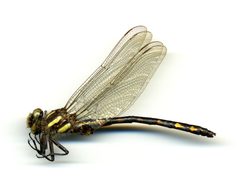
Cordulegaster diastatops, commonly known as the delta-spotted spiketail, is a in the Cordulegastridae. It occurs in North America, with records from the United States including Vermont. The species is classified as Least Concern by the IUCN, with a stable and no immediate threats to its survival. Like other spiketails, females possess a prominent ovipositor used for -laying in aquatic substrates.


Pronunciation
How to pronounce Cordulegaster diastatops: //ˌkɔr.dʊ.ləˈɡæs.tər ˌdaɪ.əˈstæ.tə.ˌpɒps//
These audio files are automatically generated. While they are not always 100% accurate, they are a good starting point.
Identification
The specific epithet "diastatops" and "delta-spotted spiketail" suggest distinctive markings, likely triangular or delta-shaped spots on the . As a member of Cordulegaster, it shares the trait of yellow to golden ringed abdominal patterning. Females can be identified by the prominent, spike-like ovipositor that gives the common name "spiketail" to this group. Accurate identification requires examination of wing venation, abdominal pattern details, and genitalia structure.
Images
Distribution
North America, with confirmed records from the United States including Vermont. The ' range appears to be centered in eastern North America, though precise distribution boundaries are not well documented in available sources.
Similar Taxa
- Cordulegaster diadema (Apache spiketail)Congeneric with similar spiketail and overlapping southwestern North American range; distinguished by specific abdominal patterning and distribution
- Cordulegaster boltonii (golden-ringed dragonfly)European congeneric sharing the characteristic yellow-ringed abdominal pattern; not overlapping in distribution with C. diastatops
More Details
Conservation Status
The IUCN lists Cordulegaster diastatops as Least Concern () with a stable trend. No specific conservation measures are currently required for this .