
Hylobittacus
Byers, 1979
Species Guides
1- Hylobittacus apicalis(Black-tipped Hangingfly)
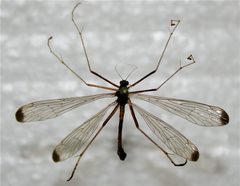
Hylobittacus is a of hangingflies ( Bittacidae) established by Byers in 1979. The sole , Hylobittacus apicalis, is the most common hangingfly in Illinois and widely distributed throughout the lower United States with an isolated in Mexico. are medium-sized, reaching approximately 1.9 cm in body length, and are active diurnally from late April to early August. The genus is notable for its elaborate mating system involving and the inability of adults to walk due to tarsal specialization for hanging.
Pronunciation
How to pronounce Hylobittacus: /ˌhaɪloʊˈbɪtəkəs/
These audio files are automatically generated. While they are not always 100% accurate, they are a good starting point.
Identification
Distinguished from other Bittacidae by the combination of short (proportionally to body size), specific abdominal segment structure in males, and geographic distribution concentrated in the lower United States. The status of the genus means identification to genus level equates to identification for H. apicalis. are the most common hangingfly in Illinois, facilitating field recognition in that region.
Images
Habitat
inhabit areas around small herbaceous plants. can reach large sizes of several thousand individuals. Coexists with other Mecoptera populations in the same areas.
Distribution
Widely distributed throughout the lower United States. Most common hangingfly in Illinois. Isolated present in Mexico.
Seasonality
active from late April to early August. Activity is .
Diet
are predatory, feeding primarily on non-insect and insects captured using prehensile hind . Auchenorrhyncha (aphids, treehoppers, leafhoppers, psyllids) are the most frequently captured prey. Larvae are saprophagous, feeding on dead insects.
Life Cycle
Holometabolous development with , larval, pupal, and stages. Eggs are roughly spherical, 0.7 mm by 0.65 mm, tan to orange in color, and dropped onto the forest floor by hanging females. Larvae are eruciform with sclerotized , soft segmented body, on abdominal segments, and composed of 7 . Fourth instar larvae prepare a burrow for . Pupae are exarate and morphologically similar to adults with wings folded tightly against the body.
Behavior
are incapable of due to tarsal specialization; they hang from foliage by their forelegs when not in . Flight is slow and consists of short distances, usually less than 4 feet. Prey capture occurs through three methods: flying out to seize prey with hind , hanging and grabbing passing prey, or sweeping legs while flying or moving along vegetation. Males attract females using released from abdominal glands after performing a short flight while holding prey. Males present prey as ; gift size determines copulation success and duration. Some males employ alternative tactics including prey stealing from other males and female mimicry to acquire prey.
Ecological Role
of small , particularly sap-sucking insects in the suborder Auchenorrhyncha. Saprophagous larvae contribute to decomposition of insect carcasses. Serves as prey for web-making spiders, robber flies, , and conspecifics. for parasitic Forcipomyia mcateei and Nosema apicalis.
Human Relevance
Used as a study organism due to activity, ease of observation, and large sizes. No documented economic importance or pest status.
Similar Taxa
- BittacusOther in Bittacidae; distinguished by proportional antennal length and abdominal segment structure in males.
- Other Mecoptera families (Panorpidae, Boreidae, etc.)Hangingflies (Bittacidae) uniquely possess prehensile hind for prey capture and cannot walk; other Mecoptera lack this combination of traits.
More Details
Population ecology
can reach several thousand individuals and coexist with other Mecoptera in the same area.
Male alternative reproductive tactics
Males may steal prey from other males (successful ~57% of time) or use female mimicry to deceive males into offering prey (successful prey acquisition in ~34% of attempts, with ~15% of interrupted copulations resulting in the stealing male mating with the female).
Microsporidian infection
commonly infected by Nosema apicalis, with rates increasing through summer and females showing 3 times higher infection rates than males. H. apicalis is the primary for this among mecopterans.