
Apterobittacus apterus
(MacLachlan, 1871)
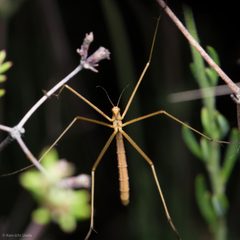
Apterobittacus apterus is a wingless of hangingfly ( Bittacidae) in the order Mecoptera. First described by MacLachlan in 1871, it is the type species of the Apterobittacus. Unlike most bittacids, which possess two pairs of wings and are capable of , A. apterus is completely (wingless). This species is to North America and represents an unusual evolutionary trajectory within the Mecoptera, where wing reduction is rare. The genus name directly references this wingless condition.
Pronunciation
How to pronounce Apterobittacus apterus: /æpˌtɛroʊˈbɪtəkəs ˈæptərəs/
These audio files are automatically generated. While they are not always 100% accurate, they are a good starting point.
Identification
Distinguished from all other Bittacidae by the complete absence of wings (aptery). Most bittacids possess two pairs of membranous wings; A. apterus is the only North American with complete winglessness. May be confused with nymphal stages of other Mecoptera or with other elongate, wingless insects, but the combination of forelegs, hanging posture, and genitalic characters confirms identity.
Images
Appearance
Completely wingless () with elongated, slender body form typical of Bittacidae. Body elongated with long, forelegs adapted for capturing prey. Hind legs elongated, used for hanging from vegetation. Coloration and detailed morphological features require specimen examination.
Distribution
North America. Specific range details within North America are not well documented in available sources.
Similar Taxa
- Other Bittacidae speciesAll other hangingflies possess wings; A. apterus is uniquely wingless in the .
- Boreidae (snow scorpionflies)Some Boreidae are wingless or have reduced wings, but differ in body form, preference (typically cold climates), and lack the characteristic hanging and forelegs of Bittacidae.
More Details
Taxonomic significance
Apterobittacus apterus represents one of the few cases of complete winglessness in Mecoptera, an order where is otherwise ubiquitous. The generic name Apterobittacus ("wingless hangingfly") explicitly denotes this condition. MacLachlan's 1871 description established both the and , making this the type species of Apterobittacus.
Evolutionary context
Winglessness in insects typically evolves in stable, isolated environments such as caves or islands. The evolutionary drivers for wing loss in A. apterus remain unstudied, but the provides an important comparative system for understanding flightlessness evolution in holometabolous insects.
Sources and further reading
- BugGuide
- GBIF taxonomy match
- NCBI Taxonomy
- Catalogue of Life
- Encyrtid Holdings | Entomology Research Museum
- Research Showcases Best and Brightest Fathers of the Insect World
- Featured Guest Photo: A Spectacular Case of Mimicry | Beetles In The Bush
- Bollworms rising! | Beetles In The Bush
- Uncategorized | Blog - Part 42
- [No taxon] | Beetles In The Bush | Page 4