Tortricidia testacea
Packard, 1864
warm-chevroned moth, Early Button Slug Moth
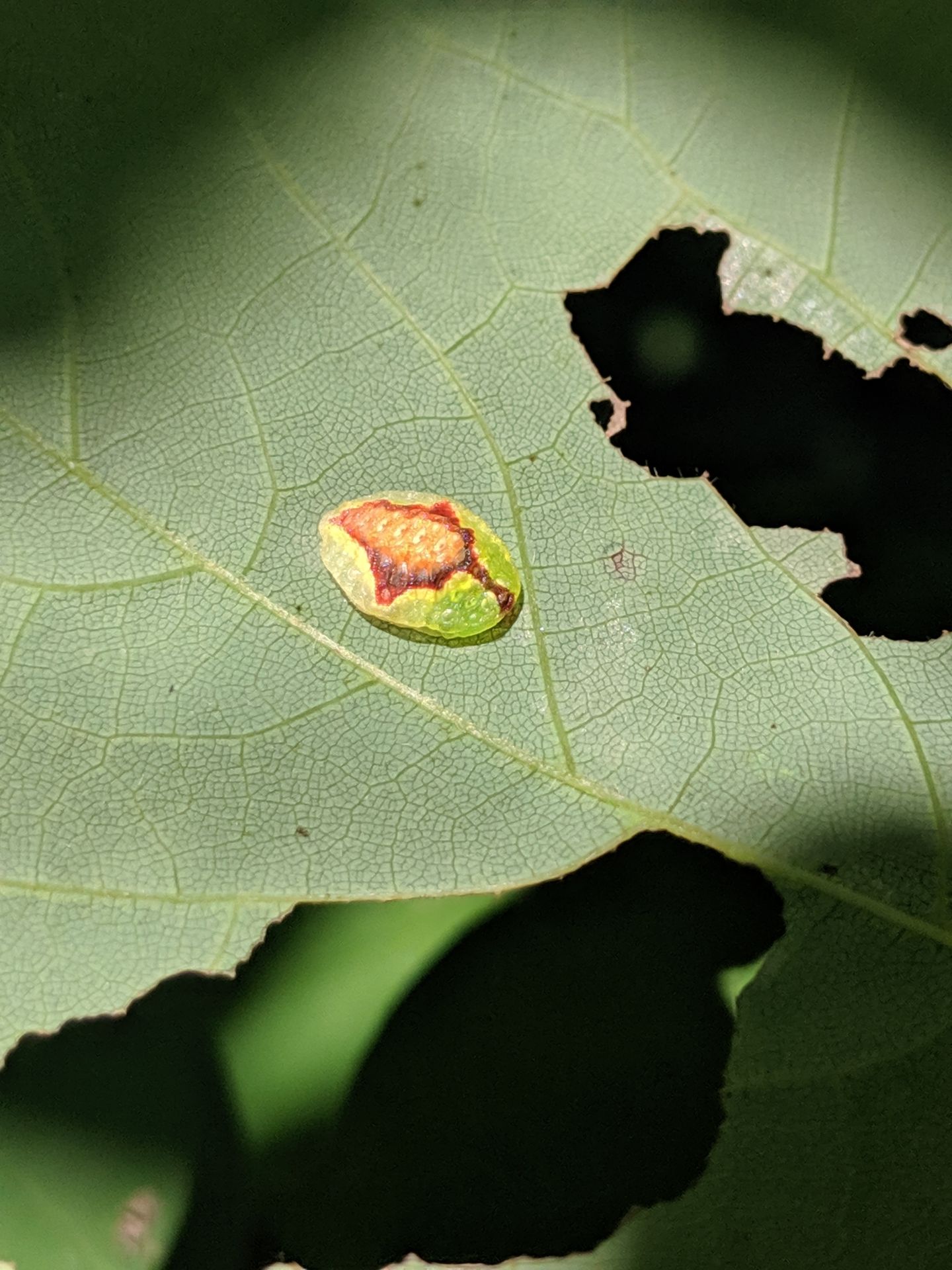
Tortricidia testacea, commonly known as the warm-chevroned or Early Button Slug Moth, is a of slug caterpillar moth in the Limacodidae. It is distributed across eastern and central North America, from Nova Scotia west to Manitoba and south to Missouri and Mississippi, with an additional record from South Carolina. The species is notable for its distinctive wing pattern and its larval association with several hardwood tree species.
Pronunciation
How to pronounce Tortricidia testacea: /tɔɹˈtrɪsɪdiə tɛˈsteɪʃə/
These audio files are automatically generated. While they are not always 100% accurate, they are a good starting point.
Identification
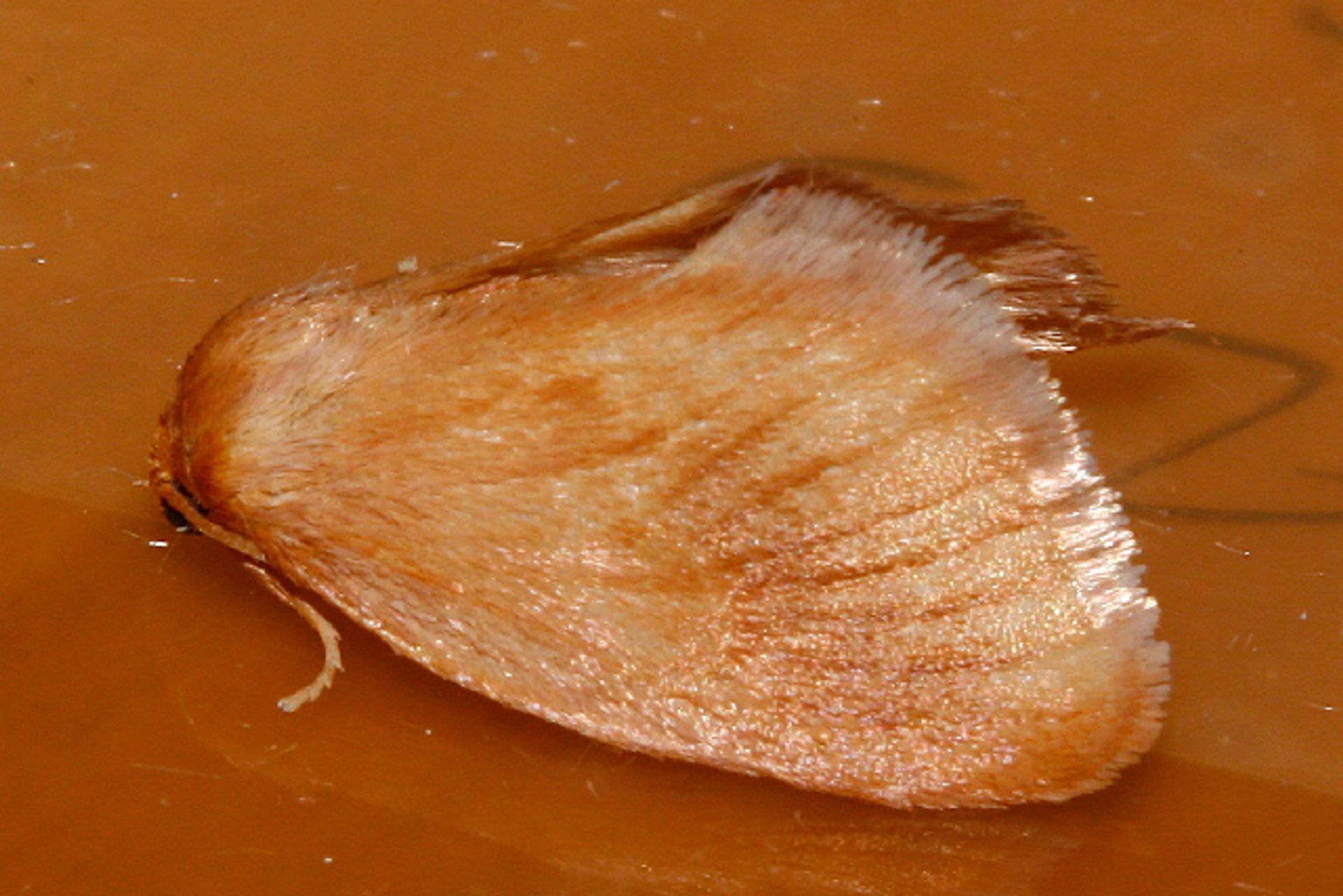
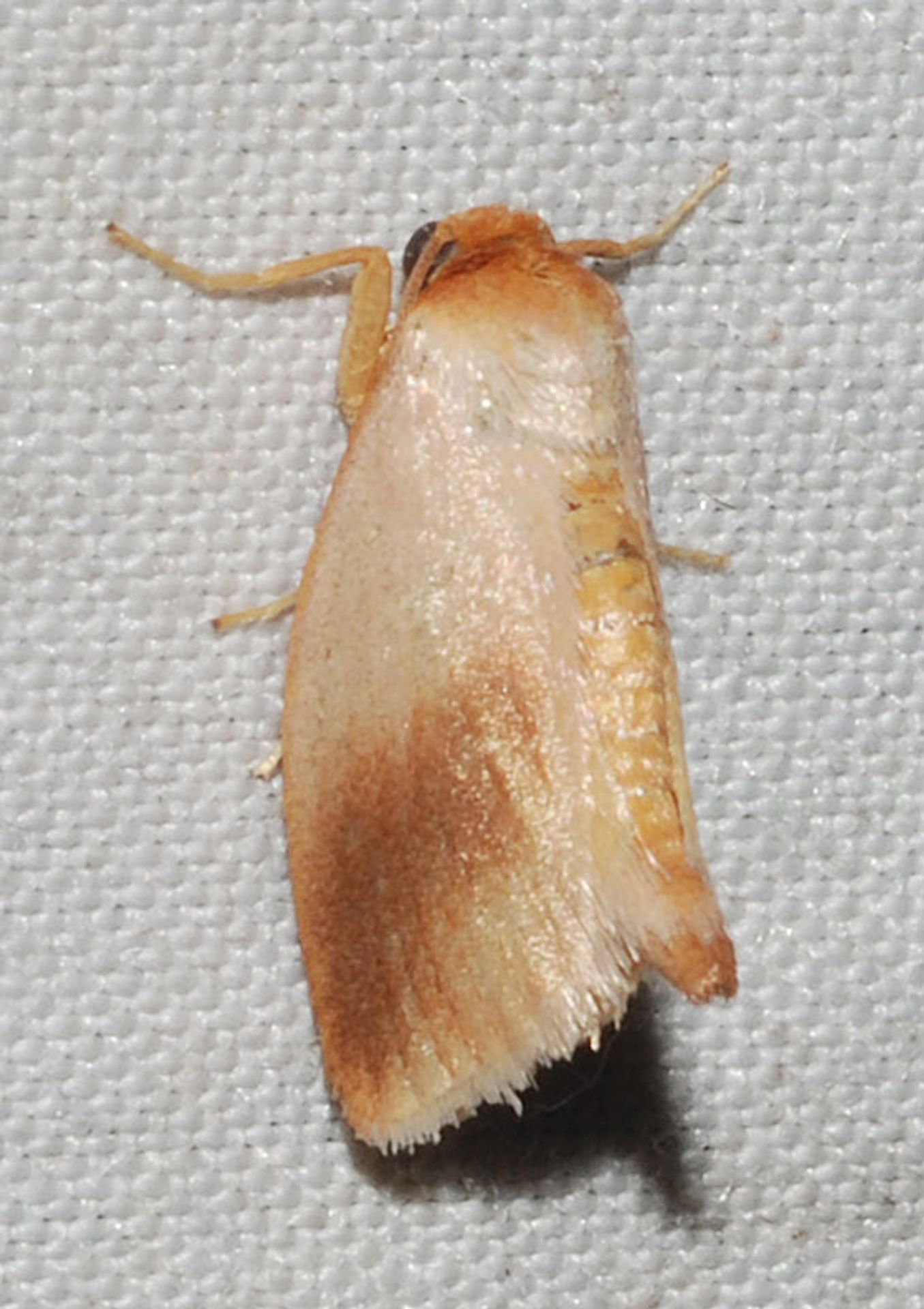
can be distinguished from similar Tortricidia by the warm brown forewing coloration with chevron-shaped markings. Distinguished from Tortricidia pallida by color tone (pallida is paler). Distinguished from Tortricidia flexuosa by wing pattern details. Larvae are slug caterpillars with reduced , typical of Limacodidae.
Images
Appearance
Wingspan 15–26 mm. Forewings with warm brown ground color and characteristic chevron-shaped markings.
Distribution
Eastern and central North America: Nova Scotia west to Manitoba, south to Missouri and Mississippi; also recorded from South Carolina. Canadian records include Alberta, Manitoba, and Saskatchewan.
Seasonality
active April to August.
Diet
Larvae feed on leaves of beech (Fagus), birch (Betula), black cherry (Prunus serotina), chestnut (Castanea), oak (Quercus), and witch-hazel (Hamamelis).
Host Associations
- Fagus - larval food plantbeech
- Betula - larval food plantbirch
- Prunus serotina - larval food plantblack cherry
- Castanea - larval food plantchestnut
- Quercus - larval food plantoak
- Hamamelis - larval food plantwitch-hazel
Similar Taxa
- Tortricidia pallidaSimilar size and wing shape; distinguished by paler overall coloration
- Tortricidia flexuosaSimilar size and distribution; distinguished by differences in wing pattern